
Sleep and Fitness: Why Rest Days Matter

Sleep and Fitness: Why Rest Days Matter

Woman lifting weights next to a woman sleeping peacefully in bed, representing training and recovery

You have been training hard. Every day, no days off, full commitment. You are proud of the consistency, and yet something is not adding up. Your performance is declining instead of improving. Your muscles ache constantly rather than occasionally.

You are not being lazy. You are overtrained. And the missing piece is not more exercise, it is rest. Your body does not get stronger during your workout. It gets stronger during your recovery. This article is going to change how you think about rest, and by extension, how you train.

What Actually Happens During a Workout

When you lift weights, run, or perform any form of intense physical activity, you are creating controlled damage. Your muscle fibres develop microscopic tears under the mechanical load. Your glycogen stores, the fuel your muscles run on, become depleted. Your nervous system experiences significant fatigue, and your joints and connective tissues are placed under sustained stress.

None of this is a bad thing. It is the necessary stimulus for adaptation. But the adaptation itself, the muscle repair, the strength increase, the cardiovascular improvement, does not happen while you are exercising. It happens afterward, during recovery, and most significantly during sleep.

Skip the recovery, and you accumulate damage without the repair. That is the definition of overtraining.

What Sleep Does for Your Fitness

While you are unconscious, your body is doing some of its most sophisticated and important work, and much of it is directly relevant to your fitness goals.

Growth Hormone Release

Human growth hormone, the primary driver of muscle repair and fat metabolism, is secreted in its largest pulses during deep sleep. Cut your sleep short and you cut this process short.

Protein Synthesis Peaks

Muscle protein synthesis is elevated during sleep, particularly if you consumed protein earlier in the day. The protein you eat provides the raw material, sleep provides the construction time.

Nervous System Recovers

Intense exercise taxes your central nervous system. A well-rested athlete consistently outperforms a fatigued one, even with identical training histories.

Cortisol Is Regulated

Chronic elevation of cortisol breaks down muscle tissue and promotes fat storage. Sleep is one of the most effective mechanisms for bringing cortisol back to a healthy baseline.

How Much Sleep Do Fitness Goals Require

The standard recommendation of seven to nine hours per night is a good general guideline. But for people training consistently, the research suggests the higher end, eight to nine hours, produces measurably better outcomes.

A study from Stanford University found that basketball players who extended their sleep to ten hours per night showed significant improvements in sprint times, shooting accuracy, reaction time and reported energy levels. No changes were made to their training or nutrition. Sleep alone drove the improvements.

For the average person, eight hours is a realistic and well-supported target. Less than seven hours consistently has been linked to:

  • Reduced strength output during training sessions
  • Slower muscle recovery between workouts
  • Increased injury risk due to impaired coordination and tissue repair
  • Greater appetite and stronger cravings for high-calorie foods
  • Reduced fat loss even when caloric intake is controlled

Why Rest Days Are Not Optional

A rest day does not mean you failed. It means you understand how adaptation works. When you train the same muscle groups day after day without adequate rest, several things happen, none of them good. The micro-tears in muscle tissue accumulate faster than the body can repair them, leading to chronic soreness and eventually injury.

The person who trains four days a week and rests three will, over time, consistently outperform the person who trains seven days a week without recovery, because the four-day person's workouts are productive, while the seven-day person's workouts are increasingly counterproductive.

Active Recovery Versus Passive Rest

Rest days do not have to mean lying on the couch doing nothing, though that is sometimes exactly what your body needs.

Passive Rest

Complete physical rest, no structured exercise, minimal physical demand. Most appropriate when you are genuinely exhausted, feel the early signs of overtraining, or just finished an unusually intense training block.

VS

Active Recovery

Light, low-intensity movement that promotes circulation without creating additional training stress. Walking, gentle stretching, yoga, an easy swim, or a light cycle all qualify.

Active recovery increases blood flow to muscles, reduces the buildup of lactic acid that contributes to soreness, keeps joints mobile, and offers the psychological benefit of staying active without the pressure of a full workout. For most people, one or two days of active recovery and one day of complete passive rest per week is a practical and effective structure.

Signs You Are Not Getting Enough Recovery

Your body communicates clearly when it is under-recovered. If you recognize three or more of these consistently, your body is telling you to rest more than you currently are.

  • Persistent muscle soreness that does not resolve within 48 to 72 hours of a workout
  • Declining performance: weights that felt manageable last week feel heavy this week
  • Elevated resting heart rate in the morning, noticeably above your normal baseline
  • Disrupted sleep: difficulty falling asleep or staying asleep despite feeling tired
  • Mood changes: unusual irritability, low motivation, or a sense of dread before training sessions
  • Increased susceptibility to illness: frequent colds or minor infections indicating immune suppression
  • Constant fatigue that does not improve after a normal night of sleep

Practical Tips to Improve Sleep Quality

  • Keep a consistent sleep and wake time, even on weekends. Your circadian rhythm regulates growth hormone and cortisol according to your internal clock
  • Make your bedroom cool and dark, your core body temperature needs to drop slightly to initiate and maintain deep sleep
  • Stop training within two hours of bedtime, intense exercise elevates core body temperature and cortisol, both interfering with sleep onset
  • Avoid caffeine after 2pm, caffeine has a half-life of approximately five to six hours
  • Eat a small protein-rich snack before bed, cottage cheese, Greek yogurt or a boiled egg supports overnight muscle protein synthesis
  • Limit screen exposure in the hour before sleep, blue light suppresses melatonin and signals your brain that it is still daytime

Building Recovery Into Your Training Schedule

A sustainable training schedule treats recovery as a non-negotiable component rather than an optional extra. Here is what a well-structured week might look like for someone training three to four days per week:

Mon
Training
Tue
Active walk
Wed
Training
Thu
Rest or yoga
Fri
Training
Sat
Easy swim
Sun
Complete rest
Training session
Active recovery
Complete rest

This structure provides three productive training sessions, two active recovery days, and two genuine rest days per week. Every training session is performed with a recovered nervous system and replenished energy stores, which means every session actually produces the adaptation it is designed to create.

Your Recovery Quick Start Checklist

  • Aim for 8 hours of sleep on training days
  • Train 3 to 4 days a week with real rest between
  • Mix active recovery days with complete rest days
  • Watch for overtraining signs and act on them early
  • Keep a consistent sleep and wake time every day

Final Thoughts

Rest is not the absence of progress. It is where progress actually happens. Every hour of quality sleep, every well-timed rest day, and every active recovery session is contributing directly to the strength gains, fat loss and fitness improvements you are working toward.

The training is the stimulus. Sleep and recovery are the response, and without the response, the stimulus produces nothing. Train hard, then recover just as seriously.

The results you are after are built not just in the gym, but in every quality hour of sleep and every unapologetically taken rest day. Start treating both with the same respect you give your workouts, and watch what happens to your progress.

How Much Water Should You Drink Daily for Fitness?

How Much Water Should You Drink Daily for Fitness?

Man drinking water from a bottle after a workout in the park

You are tired. Your head feels foggy. Your workout felt harder than usual, and you have no idea why. Before you blame your schedule, your stress, or your sleep quality, when did you last drink a proper glass of water?

Dehydration is one of the most common and most overlooked reasons people feel flat, sluggish and underperforming. So how much water should you actually drink every day? The answer is more nuanced than the famous "eight glasses a day" advice most people have heard since childhood. Let us get into the real numbers, the real science and the real strategy.

Why Water Matters More Than Most People Think

Your body is approximately 60 percent water. Every single system that keeps you alive and functioning depends on it. Water transports nutrients to your cells and carries waste products away. It regulates your body temperature through sweat, cushions your joints, and supports kidney function, digestion and even the production of hormones. Your brain is roughly 75 percent water, which explains why even mild dehydration impairs concentration, decision making and mood.

For fitness specifically, water plays an even more direct role. During exercise, your muscles generate heat and your body responds by producing sweat to cool you down. Lose enough of it without replacing it, and your cardiovascular system has to work harder to pump blood, your muscles receive less oxygen, and your performance drops noticeably.

Studies have shown that being just 2 percent dehydrated reduces aerobic performance by up to 10 percent and strength output by 5 to 8 percent. You can reach that threshold after a moderately intense 60 minute workout in warm conditions without drinking anything. Water is not a supplement. It is the foundation everything else is built on.

How Much Water Should You Drink Daily

The "eight glasses a day" rule is a reasonable starting point, but it is not personalized to your body, your activity level or your climate. A more accurate starting point is based on body weight: drink approximately 35 milliliters of water per kilogram of body weight per day.

So for a 70 kilogram person, that works out to roughly 2,450 milliliters, about 2.4 liters or just over 10 standard glasses per day. For a 60 kilogram person, the calculation gives approximately 2.1 liters. This baseline then needs to be adjusted upward based on your activity level:

  • Light exercise, 30 minutes: Add 350 to 500ml
  • Moderate exercise, 45 to 60 minutes: Add 500 to 750ml
  • Intense or prolonged exercise, 60 minutes or more: Add 750ml to 1 liter or more
  • Hot climate or significant sweating: Add an additional 500ml on top of the above

So if you are a 70 kilogram person doing a 45 minute workout in warm weather, your daily target could easily reach 3 to 3.5 liters.

How to Know If You Are Drinking Enough

The most practical and reliable way to check your hydration status costs nothing and requires no equipment. Look at the color of your urine. This is not glamorous advice, but it works.

  • Pale yellow, like lemonade: well hydrated, this is your target
  • Clear: possibly slightly over-hydrated, rarely a serious problem but you can ease off a little
  • Dark yellow, like apple juice: mildly dehydrated, drink water now
  • Amber or orange: significantly dehydrated, this needs immediate attention
  • Brown: severely dehydrated or potentially a sign of a medical issue, seek help

Check this first thing in the morning. Morning urine is naturally more concentrated, but if it is consistently very dark, your overall daily intake is too low. Other signs of insufficient hydration include persistent headaches, difficulty concentrating, low energy in the afternoon, dry lips, and feeling hungry when you have eaten recently.

When Should You Drink Water Throughout the Day

Timing your water intake strategically makes a real difference, both for hydration and for fitness goals.

First Thing in the Morning

Start with a large glass of water before coffee, before breakfast, before your phone. This kickstarts metabolism and rehydrates tissues after sleep.

Before Meals

Drinking 350 to 500ml of water 20 to 30 minutes before eating reduces meal time hunger and helps with portion control without affecting your enjoyment of the meal.

Before, During and After Exercise

  • Drink 400 to 600ml in the 2 hours before a workout
  • Sip 150 to 250ml every 15 to 20 minutes during exercise
  • Drink 500ml after your workout to replace what was lost

Mid Afternoon and Before Bed

Before reaching for coffee or a snack during your energy dip, drink a full glass of water. A small glass before sleep is fine, but avoid a large amount that could disrupt your sleep.

Does Coffee, Tea or Other Drinks Count

Yes, caffeinated drinks like coffee and tea do count toward your hydration, contrary to what was previously believed. More recent research has shown that moderate caffeine consumption does not cause net fluid loss in regular coffee and tea drinkers whose bodies have adapted to it. However, there are some important distinctions:

  • Plain water is always the best hydration source, it has no additives, no calories and no variables
  • Coffee and tea count but should not replace water entirely, aim for water to make up the majority of your intake
  • Sparkling water counts fully, an excellent hydrating alternative if plain water feels boring
  • Milk and herbal teas count, both are good contributors to daily fluid intake
  • Sugary drinks do not count. Sodas, packaged juices and sweetened beverages may contain water, but the sugar counteracts the hydration benefit and adds unnecessary calories

Practical Tips to Drink More Water Every Day

Knowing how much water you need and actually drinking it are two different challenges. Here are strategies that genuinely work:

01

Carry a Reusable Bottle

When water is visible and accessible, you drink it. A one liter bottle refilled twice gives you your baseline without counting glasses.

02

Set Hourly Reminders

A gentle reminder every hour to take a few sips adds up significantly over the course of a day, especially if you get absorbed in work.

03

Drink Before Every Meal

A full glass before every meal and snack adds three to five glasses to your day without any deliberate effort.

04

Eat Water-Rich Foods

Cucumbers, watermelon, oranges, strawberries, tomatoes and leafy greens all have very high water content and add fiber and nutrients too.

05

Start With a Habit Stack

Place a glass of water on your bedside table the night before, and pair it with something you already do every morning to make it automatic.

06

Flavor Your Water

A slice of lemon, cucumber, mint leaves or a few berries in a jug of water make drinking it noticeably more enjoyable.

Can You Drink Too Much Water

Yes, though it is genuinely rare in everyday situations and much less common than under-hydration. Drinking an extreme excess of water in a short period can dilute the sodium levels in your blood, a condition called hyponatremia.

This is occasionally seen in endurance athletes who drink very large volumes of plain water over several hours without replacing electrolytes. For the average person following normal hydration guidelines, it is not a meaningful concern. If exercising intensely for more than 90 minutes, consider an electrolyte drink or a pinch of mineral salt in your water.

A Simple Daily Hydration Target to Start With

If calculating percentages feels overwhelming, use this as your starting framework:

Body WeightBaseline Daily WaterWith Exercise, 30 to 60 min
50 kg1.75 liters2.3 liters
60 kg2.1 liters2.7 liters
70 kg2.45 liters3.1 liters
80 kg2.8 liters3.5 liters
90 kg3.15 liters3.9 liters

Use this as a starting point. Adjust based on how your body feels, the color of your urine, and how active your day is. Your personal ideal may be slightly above or below these numbers, and that is completely normal.

Your Daily Hydration Quick Start Checklist

  • Calculate your baseline at 35ml per kilogram of body weight
  • Add 350ml to 1 liter more depending on exercise and heat
  • Start every morning with a large glass before anything else
  • Check your urine color, aim for pale yellow
  • Carry a bottle and sip through the day rather than waiting to feel thirsty

Final Thoughts

Water is the simplest, cheapest and most immediately effective tool available for improving how you feel, how you perform and how your body functions every single day. It costs nothing and requires no planning beyond basic consistency.

Work out your personal daily target using your body weight. Drink a glass first thing every morning. Carry a water bottle. Check the color of your urine.

Small, consistent habits around hydration will make every other healthy habit you practice more effective. Start today, one full glass, right now.

Stretching Guide: Before and After Workout

Stretching Guide: Before and After Workout | HealthFitnessDairy

Stretching Guide: Before and After Workout

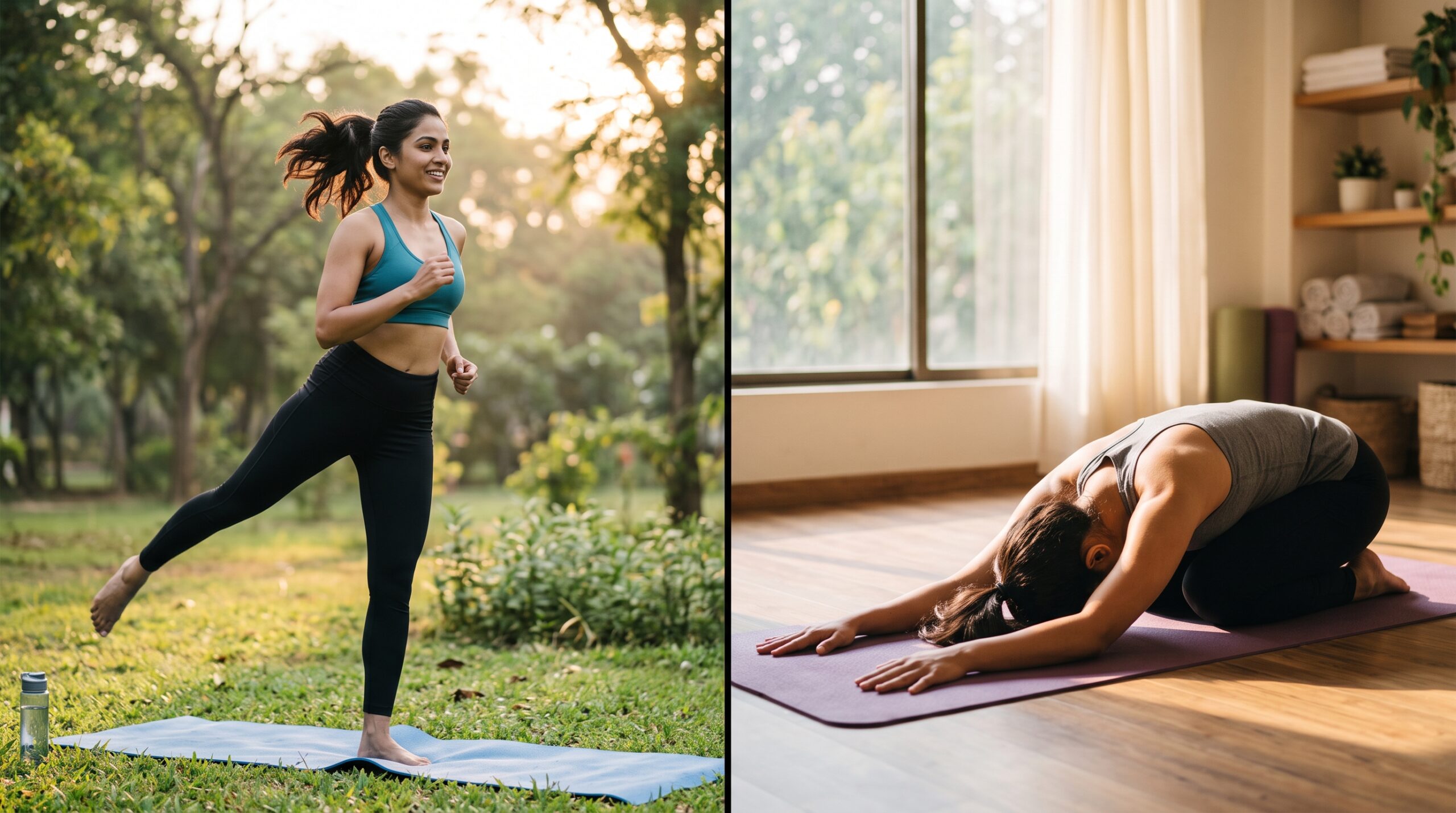
Dynamic stretching before a workout and static stretching after a workout

Most people treat stretching like the terms and conditions of fitness, they scroll past it, skip it entirely, and assume nothing bad will happen. Until something bad happens.

A pulled muscle on your third week of a new routine. A stiff lower back that lingers for days. Knee tightness that makes you feel twice your age the morning after leg day. Sound familiar? Stretching is not an optional add on, it is the part of your workout that protects everything else you are doing. This guide covers everything you need to know about stretching before and after a workout, in plain language, with routines you can use today.

The Biggest Mistake People Make With Stretching

Ask most people what they do before a workout, and they will say they stretch. Ask what that looks like, and they will describe standing still, grabbing their ankle, and holding it for 30 seconds.

That is static stretching, and doing it on cold muscles before exercise is actually counterproductive. Studies have consistently shown that static stretching before a workout can temporarily reduce muscle strength and power by up to 8 to 10%. You are essentially lengthening a cold, unprepared muscle and then asking it to perform explosively. That is a setup for injury, not prevention.

The right approach is different before and after. Before a workout, you need dynamic stretching. After a workout, static stretching is exactly what your body needs. Understanding this difference alone puts you ahead of most gym goers.

What Happens to Your Body Without Proper Stretching

Muscles are like rubber bands. A cold rubber band stretched suddenly can snap. A warm rubber band stretches smoothly without damage.

When you exercise without a proper warm up, your muscle fibres and connective tissues are stiff. Blood flow to the muscles is limited. Your joints have not been taken through their full range of motion. In this state, even a routine movement, a squat, a lunge, a shoulder press, can cause strain.

Skip the post workout cool down stretch, and you are leaving another problem in place. After intense exercise, your muscles are contracted and shortened. Lactic acid and metabolic waste have built up. If you do not stretch and allow the muscles to lengthen and circulation to clear the waste products, you wake up the next day feeling unnecessarily stiff and sore, which makes your next workout harder to start.

Consistent stretching, done correctly, reduces both of these problems significantly.

Before Your Workout: Dynamic Stretching

Dynamic stretching means controlled, rhythmic movement through a range of motion. You are not holding a position, you are moving through it repeatedly. This increases blood flow, raises muscle temperature, activates the nervous system, and prepares your joints for the specific demands of the workout ahead.

Spend 5 to 7 minutes on this before every session. It is not a warm up jog on a treadmill, it is targeted movement that gets your body ready to work.

01

Leg Swings

10 swings per leg

Stand beside a wall, holding it lightly for balance. Swing one leg forward and backward in a controlled arc, not wildly, but through a comfortable range that gradually increases with each swing.

How to Do It

Stand beside a wall, holding it lightly for balance. Swing one leg forward and backward in a controlled arc, not wildly, but through a comfortable range that gradually increases with each swing. Ten swings per leg.

Why It Matters

This mobilizes the hip joint and wakes up the hip flexors and hamstrings, exactly what you need before squats, lunges, or any lower body work.

02

Arm Circles

15 sec each direction

Extend both arms out to the sides and draw large, slow circles, forward then backward, gradually increasing the size as you go.

How to Do It

Extend both arms out to the sides and draw large, slow circles, forward for 15 seconds, then backward for 15 seconds. Gradually increase the size of the circles as you go.

Why It Matters

This lubricates the shoulder joint and activates the rotator cuff muscles, which are critical to protect during pressing or pulling exercises.

03

Hip Circles

10 rotations each way

Stand with feet shoulder width apart and hands on hips. Draw slow, large circles with your hips, like a slow hula hoop movement.

How to Do It

Stand with feet shoulder width apart and hands on hips. Draw slow, large circles with your hips, 10 rotations each direction. Think of it like a slow hula hoop movement.

Why It Matters

Most people have chronically tight hips from sitting. Hip circles open up the joint before it is asked to move under load, which reduces strain on the lower back and knees.

04

Inchworms

6 to 8 reps

Stand with feet hip width apart, hinge forward and walk your hands out to a plank, hold briefly, then walk your feet back in and stand up.

How to Do It

Stand with feet hip width apart. Hinge forward at the hips and walk your hands out along the floor until you are in a plank position. Hold for two seconds, then walk your feet toward your hands and stand back up. Repeat 6 to 8 times.

Why It Matters

Inchworms warm up the entire posterior chain, hamstrings, lower back, calves, while also engaging the core and shoulders. It is one of the most complete pre workout movements you can do.

05

High Knees (Controlled)

30 seconds

March in place, driving your knees up toward your chest at a moderate pace, keeping your core lightly engaged and posture tall.

How to Do It

March in place, driving your knees up toward your chest at a moderate pace for 30 seconds. Keep your core lightly engaged and your posture tall.

Why It Matters

This elevates your heart rate gently, activates your hip flexors, and signals to your entire body that it is time to work, without fatiguing you before your session starts.

06

Torso Rotations

10 reps each way

Stand tall with arms extended forward at shoulder height, rotate your upper body right then left through slow, deliberate rotations.

How to Do It

Stand tall with feet shoulder width apart and arms extended forward at shoulder height. Rotate your upper body to the right as far as comfortable, then back through centre and to the left. Perform 10 slow, deliberate rotations each way.

Why It Matters

This mobilizes the thoracic spine, the middle section of your back, which tends to be stiff in people who sit for long periods. Opening it up before a workout improves posture and reduces the risk of strain during rotational movements.

After Your Workout: Static Stretching

After exercise, your muscles are warm, pliable, and ready to be lengthened. This is when static stretching, holding a position for 20 to 45 seconds, is both safe and highly effective.

Post workout static stretching does several things. It helps the muscles return to their resting length after contraction. It promotes blood flow to flush out metabolic waste. And it activates the parasympathetic nervous system, the rest and digest state, which helps your body shift from workout mode into recovery mode.

Spend 8 to 10 minutes on this after every session. The investment is small, the impact on soreness, flexibility, and long term joint health is significant.

01

Standing Quad Stretch

30 sec per side

Stand on one leg, bend the other knee and bring your heel toward your glutes, holding your ankle. Keep both knees together and stand tall.

How to Do It

Stand on one leg, bend the other knee and bring your heel toward your glutes, holding your ankle. Keep both knees together and stand tall. Hold 30 seconds per side.

Why It Matters

The quadriceps are worked heavily in any lower body session, and they need to be lengthened after intense use. Tight quads also pull on the knee joint and compress the patella, contributing to the knee discomfort many people experience after training.

02

Seated Hamstring Stretch

30 to 40 seconds

Sit on the floor with legs extended in front of you. Hinge forward from the hips, not by rounding your back, until you feel a stretch along the back of your thighs.

How to Do It

Sit on the floor with legs extended in front of you. Hinge forward from the hips, not by rounding your back, but by tilting your pelvis forward, until you feel a stretch along the back of your thighs. Hold for 30 to 40 seconds.

Why It Matters

The hamstrings are among the most commonly tight muscles in people who exercise, and chronically shortened hamstrings contribute to lower back pain, poor posture, and reduced athletic performance.

03

Hip Flexor Lunge Stretch

30 sec per side

Step one foot forward into a lunge and lower your back knee to the floor. Push your hips gently forward until you feel a deep stretch at the front of your back hip.

How to Do It

Step one foot forward into a lunge and lower your back knee to the floor. Push your hips gently forward until you feel a deep stretch at the front of your back hip. Hold 30 seconds per side.

Why It Matters

If there is one stretch that matters most for the modern lifestyle, this is arguably it. Your hip flexors are contracted every time you sit, and they are working hard during exercise. Failing to stretch them leaves them chronically shortened, which tilts your pelvis and compresses your lumbar spine.

04

Child's Pose

45 to 60 seconds

From kneeling, push your hips back toward your heels and extend your arms forward on the floor, forehead down. Breathe deeply and let your lower back decompress.

How to Do It

From kneeling, push your hips back toward your heels and extend your arms forward on the floor, forehead down. Breathe deeply and let your lower back decompress with each exhale. Hold for 45 to 60 seconds.

Why It Matters

This gently stretches the lower back, hips, and shoulders simultaneously. It is also deeply calming, physically transitioning your body from exertion to rest in a way that feels immediately satisfying.

05

Cross Body Shoulder Stretch

25 to 30 sec per side

Bring one arm across your chest and use the opposite hand to press it gently closer to your body.

How to Do It

Bring one arm across your chest and use the opposite hand to press it gently closer to your body. Hold 25 to 30 seconds per side.

Why It Matters

After any upper body session, the posterior shoulder capsule is tight. This stretch directly targets that area, reducing the shoulder stiffness that commonly builds up over time with consistent pressing and pulling exercises.

06

Chest Opener Stretch

25 to 30 seconds

Clasp your hands behind your back and gently straighten your arms, lifting them slightly while opening your chest toward the ceiling.

How to Do It

Clasp your hands behind your back and gently straighten your arms, lifting them slightly while opening your chest toward the ceiling. Hold 25 to 30 seconds.

Why It Matters

This counteracts the rounded, forward hunched posture that develops from bench pressing, push ups, and everything we do at a desk or on our phones. After any session involving chest or pushing movements, this stretch is essential.

07

Cat Cow Spinal Release

8 to 10 cycles

Get on all fours. Inhale as you let your belly drop and lift your head and tailbone, exhale as you round your entire spine toward the ceiling and drop your head.

How to Do It

Get on all fours. Inhale as you let your belly drop and lift your head and tailbone (cow). Exhale as you round your entire spine toward the ceiling and drop your head (cat). Move slowly through 8 to 10 full cycles.

Why It Matters

This is a perfect way to end any workout because it mobilizes the entire spine from top to bottom, releases tension that accumulates in both the upper and lower back during training, and leaves you feeling genuinely looser than when you started.

How Long Should You Actually Stretch?

Here is a simple answer to what confuses a lot of people:

5 to 7 min
Before workout (dynamic)
8 to 10 min
After workout (static)
13 to 17 min
Total per session

That is it. You do not need 30 minutes of yoga before a workout or an hour of deep tissue work after. Consistent, correctly timed stretching for around 15 minutes total is what actually changes how your body feels and performs over time.

Common Stretching Mistakes to Avoid

  • Bouncing during static stretches. Ballistic bouncing triggers the stretch reflex, your muscle contracts defensively rather than relaxing. Hold your stretches steadily.

  • Holding your breath. Tension in the breath transfers to the muscle. Exhale slowly as you ease into each stretch, and breathe continuously throughout the hold.

  • Skipping stretching when you are short on time. If you only have 20 minutes to work out, use 5 for dynamic stretching, 10 for the actual session, and 5 for post workout stretching. A compressed session with proper stretching beats a full session without it.

  • Stretching through sharp pain. Discomfort and mild tension are normal. Sharp or intense pain is not. Back off, and if it persists, get it checked.

Quick Reference: Dynamic vs Static

 Dynamic StretchingStatic Stretching
WhenBefore your workoutAfter your workout
HowControlled, repeated movementHold a position steadily
Duration5 to 7 minutes total8 to 10 minutes total
Hold timeNot held, moving through range20 to 45 seconds per stretch
PurposeRaise temperature, activate musclesLengthen muscles, aid recovery

Final Thoughts

Stretching before and after a workout is not a bonus activity for flexible people. It is the framework that makes everything else you do in the gym or at home safer, more effective, and more sustainable.

Dynamic stretching prepares your body to perform. Static stretching helps it recover. Together, they reduce injury risk, improve flexibility over time, and make the difference between a fitness routine you can maintain for years and one that keeps getting interrupted by niggling aches and strains.

Start treating the 15 minutes around your workout as seriously as the workout itself. Your body, and your progress, will reflect that choice very quickly.

How to Stay Active with a Desk Job

How to Stay Active with a Desk Job – Health Fitness Dairy

How to Stay Active with a Desk Job

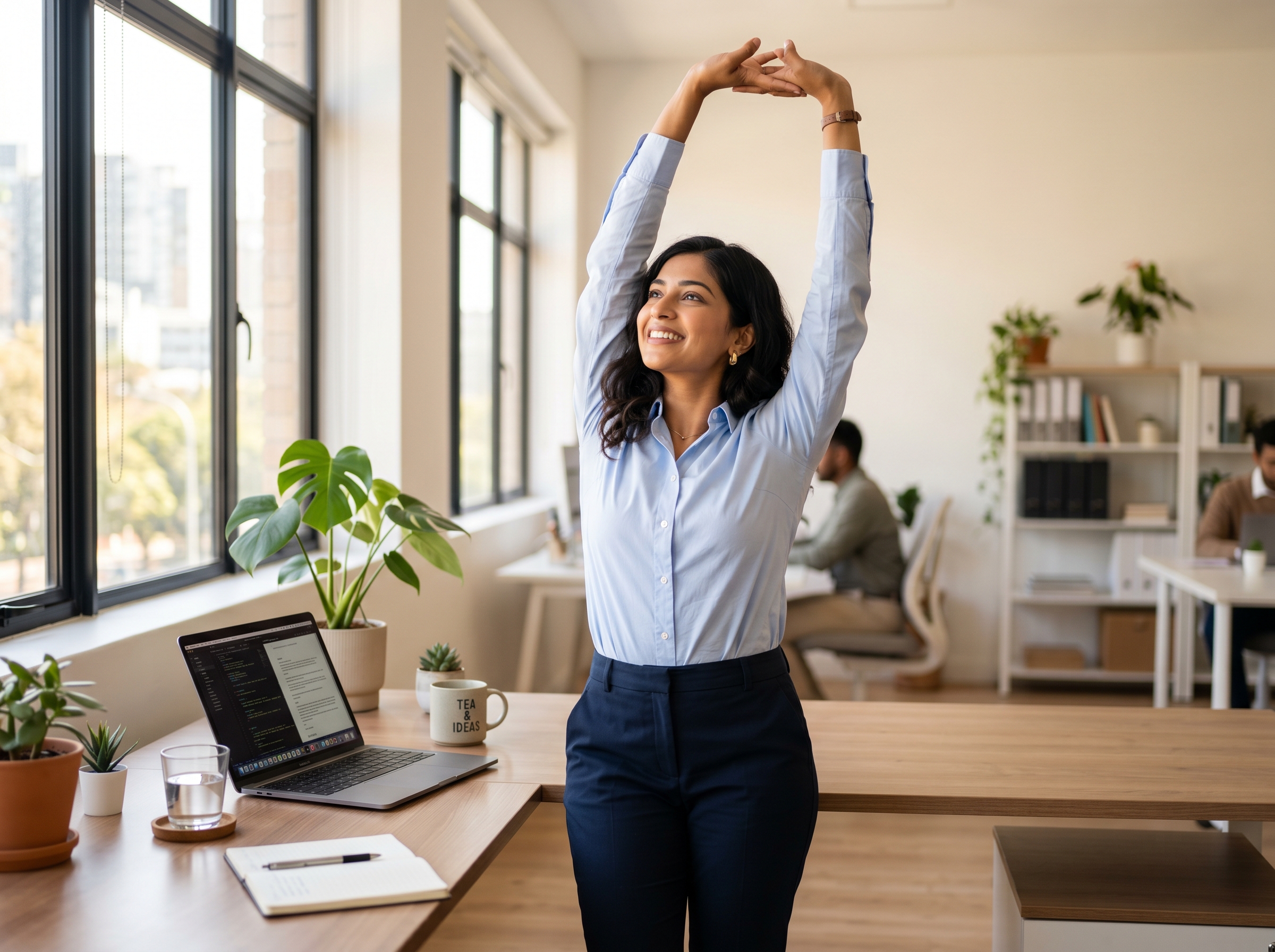
Person working at a desk trying to stay active

You sit down at 9am, look up, and it's somehow already 2pm. You haven't moved. Your back is stiff, your neck aches, and your legs feel like they've forgotten they exist. You tell yourself you'll stretch later. You don't.

Sound familiar? If you work a desk job, this is just Tuesday.

The average office worker sits for around 10 hours a day when you factor in commuting, desk time, and the couch at the end of the day. And the research on what prolonged sitting does to the body is genuinely alarming: increased risk of heart disease, type 2 diabetes, back pain, poor posture, sluggish metabolism, and even reduced mental sharpness.

The good news is that you don't need to quit your job or buy a treadmill desk to fix this. Small, strategic changes throughout your workday can counteract most of the damage. Here's exactly how to do it.

Why Sitting Is Harder on Your Body Than You Think

Most people assume that as long as they exercise in the morning or evening, the hours spent sitting don't matter much. Unfortunately, that's not how it works.

Research has consistently shown that prolonged, uninterrupted sitting has negative health effects that are largely independent of how much you exercise. In other words, a person who goes to the gym every morning but sits still for the next 8 hours is still at elevated health risk compared to someone who moves regularly throughout the day.

The reason comes down to how your body handles blood sugar, circulation, and muscle activation. When you sit for extended periods, your largest muscle groups, your legs and glutes, go essentially dormant. Blood pools in the lower body, circulation slows, your posture collapses forward, and your metabolism drops significantly. Breaking up sitting time is the fix. And it doesn't require heroic effort.

The Power of Movement Snacks

"Movement snacks" is exactly what it sounds like: small bites of physical activity scattered throughout your day rather than one long session.

Research from the University of British Columbia found that short 3-minute walks every 30 minutes were more effective at regulating blood sugar than a single 30-minute walk after work. That's significant. It means the distribution of movement matters, not just the total amount.

3 min every 30 min

Short walks every half hour beat one long walk after work for blood sugar regulation.

Consistency wins

The goal is to interrupt prolonged stillness with brief bursts of movement, consistently, all day.

Set a Timer: Seriously

The biggest obstacle to moving during the workday isn't laziness. It's the fact that you get absorbed in work and genuinely forget.

Set a timer on your phone or computer to go off every 45 to 60 minutes. When it does, stand up. Even if you just stand for 30 seconds and sit back down, you've broken the pattern. Over time, you build micro-habits around these reminders.

Many people use apps like Stretchly or desktop widgets that prompt movement breaks. Your phone's health app likely already tracks how often you stand and will remind you if you haven't moved in a while. Use that feature. Let your devices work for you.

Desk Exercises That Actually Work

You don't need to leave your desk for all of these. Some can be done right in your chair:

  • 1 Seated spinal twist Sit upright, place your right hand on the back of your chair, and gently rotate your torso to the right. Hold for 15 to 20 seconds, then switch sides. This counteracts the hunched-forward position that desk work locks you into.
  • 2 Calf raises While standing (or even seated), rise up on your toes and lower back down. Do 15 to 20 reps. This activates the calf muscles and improves circulation in the lower legs, combating that heavy, achy feeling that comes from sitting too long.
  • 3 Shoulder blade squeezes Sit up straight, pull your shoulders back, and squeeze your shoulder blades together like you're trying to hold a pencil between them. Hold for 5 seconds, release, and repeat 10 times. This directly addresses the rounding that most desk workers develop.
  • 4 Seated glute squeeze Contract your glute muscles while sitting, hold for 5 seconds, and release. Nobody can see you doing this. It's subtle and effective for reactivating muscles that essentially "switch off" during long sitting sessions.
  • 5 Neck rolls Drop your chin to your chest, slowly roll your head to the right, hold for a few seconds, then roll to the left. Do this slowly and gently with no aggressive movements. Your neck carries enormous tension from looking at a screen all day.

None of these take more than 2 minutes. Cycle through a few every hour and your body will feel noticeably different by the end of the day.

Walk More Without Rearranging Your Life

You don't need to start training for a 5K. You just need to find the small opportunities for walking that already exist in your day and actually take them.

Walk during phone calls

If a call doesn't require you to be at your computer, stand up and walk. Ten minutes of calls easily becomes ten minutes of walking with zero extra time required.

Take the longer route

Use the bathroom on a different floor. Park further away. Choose the stairs. Each feels small but they add up to thousands of extra steps over a week.

Eat lunch away from your desk

You get movement AND a genuine mental break from the screen, which actually improves your afternoon focus and reduces fatigue.

Walk to a colleague's desk

In an era of Slack messages and emails, walking over to someone's workspace is almost radical. Do it anyway. Better for communication and for your body.

Rethink Your Workspace Setup

Sometimes staying active at a desk job is about changing the environment itself, not just your habits.

Try a standing desk or converter. You don't need to stand all day as that has its own downsides. But alternating between sitting and standing every hour or so is genuinely effective for reducing the harms of prolonged sitting. Many companies will provide these on request, especially if you flag it as a health concern.

Position frequently used items away from your desk. Put your printer across the room. Keep your water glass in the kitchen so you have to refill it by walking there. It sounds almost comically simple, but it forces you to get up regularly throughout the day.

Try a balance ball chair occasionally. Sitting on an exercise ball for portions of the day engages your core and encourages better posture. Don't use it all day, but even 30 to 60 minutes creates a meaningful difference.

Use Your Breaks Intentionally

Most workers take breaks, but they spend them scrolling on their phones, which means their body still isn't moving. Use your break time differently.

A 5-minute break where you walk around the building does far more for your energy, focus, and physical health than 5 minutes of Instagram. Try the Pomodoro technique: 25 minutes of focused work, then a 5-minute break. The break doesn't count unless you physically move. You'll find your afternoon productivity actually improves when breaks are physical rather than screen-based.

What to Do After Work

All the desk movement in the world is more effective when combined with some intentional activity at the end of the day. You don't need a gym, but something that gets you moving for 20 to 30 minutes makes a genuine difference:

  • 1Evening walk after dinnerGreat for blood sugar regulation too. One of the simplest and most effective habits you can build.
  • 2Short home workout or yoga sessionEven 15 to 20 minutes at home is enough to offset the damage of a sedentary day.
  • 3Any physical hobby you enjoyCycling, swimming, badminton. The best exercise is the one you'll actually do. Pick something you like, even a little.

One Week Challenge

  • Set a movement timer every 45 minutes during work hours
  • Walk during at least one phone call per day
  • Do 5 minutes of desk exercises at lunch
  • Take the stairs instead of the elevator every day this week
  • Go for a 15-minute walk after dinner on at least 3 evenings

Final Thoughts

A desk job doesn't have to mean a sedentary life. The research is clear: consistent, distributed movement throughout the day is what protects your health, keeps your energy up, and prevents the slow accumulation of aches and stiffness that most office workers accept as inevitable.

None of this requires a gym membership or an extra hour in your day. It requires awareness, a timer, and small decisions made consistently.

Stand up when you can. Walk when there's a reason. Move a little, often. That's the whole secret and it starts today.