Full Body Workout at Home for Beginners (No Gym)

Full Body Workout at Home for Beginners (No Gym) – HealthFitnessDairy

Full Body Workout at Home for Beginners (No Gym)

Full Body Workout at Home for Beginners

The gym can feel like the most intimidating place on earth when you are just starting out. Everyone seems to know exactly what they are doing. The machines look like they need a manual. And the membership fees alone are enough to make you turn around before you have even signed up.

Here is what nobody tells you early enough: you do not need any of it. A full body workout at home is one of the most effective ways to build real strength, burn fat, and improve your fitness, with no equipment, no gym, and no experience required.

Why a Full Body Workout at Home Works Better Than You Think

When you are new to fitness, the temptation is to split things up, legs one day, arms the next, back on Friday. That is how experienced bodybuilders train. For beginners, it is actually overkill.

Works Every Muscle Group

Even if life gets busy and you miss a day, you have not completely neglected a muscle group for the entire week.

Burns More Calories

More total muscle mass is being challenged at once, which means more calories burned per session compared to split training.

Better Coordination

Full body training develops coordination between muscle groups, making everyday movement feel easier and dramatically reducing injury risk.

Time Efficient

Three sessions a week is all you need to build noticeable strength and endurance as a beginner. Not five. Not seven. Three.

How Many Days a Week Should You Train?

Three days a week is the ideal frequency for a beginner following a full body home workout routine. Strength is built during recovery, not during the workout itself. Skip the recovery days and you interrupt that process.

Monday
Full Body Workout
Tuesday
Rest or Light Walk
Wednesday
Full Body Workout
Thursday
Rest or Stretching
Friday
Full Body Workout
Weekend
Active Rest: Walking, Yoga

Warm Up Before Every Session

Jumping into a bodyweight training session with cold muscles is the fastest way to pull something and end up on the couch for a week. Two minutes of warm-up changes everything.

  • Arm circles: 20 seconds forward, 20 seconds backward
  • Leg swings: hold a wall for balance, swing each leg forward and back 10 times
  • Hip circles: hands on hips, slow large circles, 10 each direction
  • High knees marching: lift knees comfortably while walking on the spot, 30 seconds
  • Torso twists: arms extended, gently rotate left and right, 20 seconds

The Full Body Home Workout (7 Exercises)

Do each exercise for the specified reps. Rest 30 to 45 seconds between exercises. Complete 2 rounds in week one, and build to 3 rounds from week two onwards.

01

Bodyweight Squats

Muscles: Quadriceps, Glutes, Hamstrings, Core
15 reps

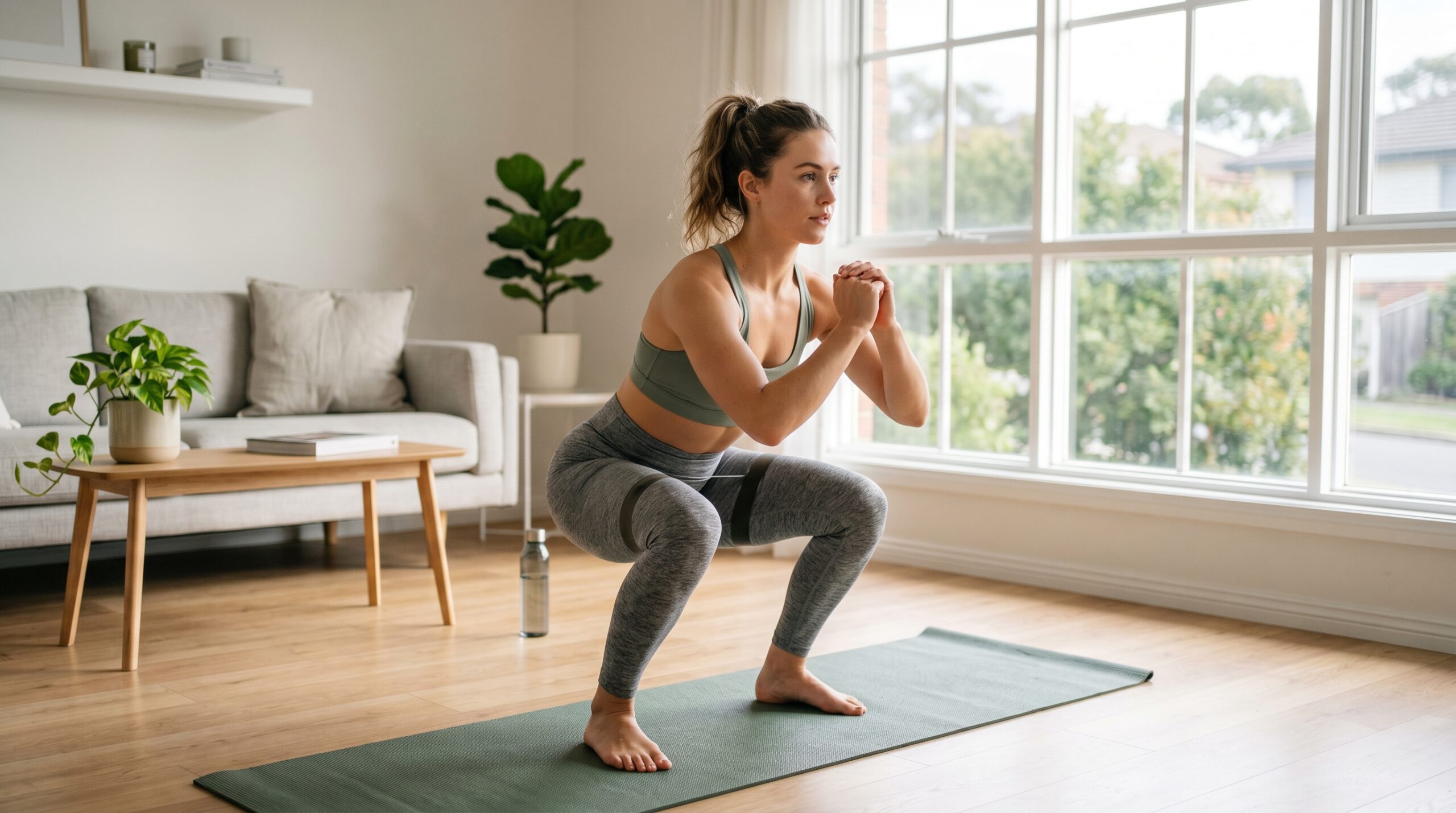
Stand with feet shoulder-width apart, toes pointed slightly outward. Lower yourself as though sitting back into a chair, chest up, knees tracking over your toes, weight through your heels. Once your thighs are roughly parallel to the floor, drive back up through your heels to standing. The squat directly targets the two largest muscle groups in the body, which means it burns significant calories while building real lower body strength.

Common mistake: Do not let your heels lift or your chest collapse forward. If depth is limited, widen your stance slightly and point your toes out a little more.
02

Push-Ups

Muscles: Chest, Front Shoulders, Triceps, Core
10 to 12 reps (knees modification available)

Place your hands slightly wider than shoulder-width, arms straight, body in a rigid line from head to heels. Lower your chest toward the floor, then press back up. The push-up develops the chest, front shoulders, and triceps simultaneously while also demanding significant core engagement. If full push-ups are not accessible yet, the knee-modified version is equally valid.

Common mistake: Do not let your hips sag toward the floor or pike upward. Both positions remove the work from your chest and strain your lower back.
03

Glute Bridges

Muscles: Glutes, Hamstrings, Lower Back, Core
15 reps

Lie on your back with knees bent and feet flat on the floor, hip-width apart. Push through your heels and drive your hips toward the ceiling, squeezing your glutes firmly at the top. Lower slowly and with control. This is particularly important for anyone who spends long hours sitting, as prolonged sitting progressively weakens the glutes and causes lower back pain that plagues so many desk workers.

Common mistake: Do not rush the lowering phase. The slow, controlled descent builds as much strength as the lift itself.
04

Reverse Lunges

Muscles: Quadriceps, Glutes, Hamstrings, Stabilizers
10 reps each leg

Stand tall with feet together. Step one foot backward and lower your back knee toward the floor, keeping your front shin vertical and your front knee above your ankle. Drive back up through your front heel to return to standing. Alternate legs. The reverse lunge places significantly less force on the knee joint than a traditional forward lunge, making it the ideal choice for beginners.

Common mistake: Do not let your front knee cave inward or shoot past your toes. Keep your chest tall and your core lightly braced throughout the movement.
05

Plank Hold

Muscles: Core, Shoulders, Glutes
Hold 25 to 30 seconds

Get into a push-up position, then lower onto your forearms. Elbows directly under your shoulders. Hold your body in a straight line with no sagging hips and no raised backside. Look at the floor, not forward. The plank is the most effective core exercise in any no-equipment workout because it trains the core under real functional load, resisting gravity rather than just crunching against it.

Common mistake: Holding your breath. Breathe slowly and steadily throughout. Breath-holding creates unnecessary tension and makes the hold feel far harder than it needs to.
06

Superman Hold

Muscles: Lower Back, Glutes, Upper Back, Rear Shoulders
12 reps

Lie face down on the floor, arms extended in front of you. Simultaneously lift your arms, chest, and legs off the ground, squeezing your glutes and the muscles between your shoulder blades at the top. Hold for 2 to 3 seconds, then lower with control. This directly strengthens the muscles along your spine, which are almost universally underdeveloped in people who spend time sitting.

Common mistake: Do not jerk upward or use momentum. The movement should be slow and deliberate, with a genuine squeeze held at the top.
07

Mountain Climbers

Muscles: Core, Hip Flexors, Shoulders, Cardio
30 seconds

Start in a plank position on your hands. Drive one knee toward your chest, then rapidly switch legs in a running motion. Keep your hips low and your core braced. Mountain climbers end the circuit with both a core challenge and a significant cardiovascular spike, ensuring this bodyweight training session delivers both strength and conditioning benefits in a single movement.

Common mistake: Letting your hips rise as you fatigue. When form breaks down, slow the tempo rather than sacrificing technique.

Complete Workout at a Glance

ExerciseReps / TimeRest
Bodyweight Squats15 reps30 to 45 sec
Push-Ups10 to 12 reps30 to 45 sec
Glute Bridges15 reps30 to 45 sec
Reverse Lunges10 each leg30 to 45 sec
Plank Hold25 to 30 seconds30 to 45 sec
Superman Hold12 reps30 to 45 sec
Mountain Climbers30 seconds60 to 90 sec

Total session time: approximately 25 to 35 minutes including warm-up and cooldown.

How to Progress Week by Week

Weeks 1 to 2

2 rounds, focus entirely on learning correct form for each movement. Do not rush.

Weeks 3 to 4

Add a third round, maintain the same reps. Your body is adapting and getting stronger.

Week 5 Onward

Increase rep targets, reduce rest periods from 45 to 30 seconds, or slow the tempo significantly.

The Key Principle

Progressive overload: consistently making the workout slightly harder over time is the single most important principle in training.

Common Beginner Mistakes to Avoid

  • Skipping rest days

    More sessions per week does not mean faster results. Recovery is when adaptation happens. Honour your rest days.

  • Rushing through reps to finish faster

    Controlled, deliberate movement with full range of motion builds far more strength than sloppy, fast repetitions. Slow down.

  • Giving up when it gets uncomfortable

    Muscular discomfort during a workout is normal. Sharp joint pain is different and is the signal to stop.

  • Expecting visible results in one week

    Real strength changes take 4 to 6 weeks of consistent training to become noticeable. The internal changes, better energy and stronger core, happen within the first two weeks.

Final Thoughts

You do not need a gym, expensive equipment, or hours of free time to build a stronger body. This full body workout at home covers every major muscle group, uses nothing but your bodyweight, and takes under 35 minutes from warm-up to cooldown.

Three sessions a week. Rest days in between. A little more effort each week than the week before.

That is the entire formula for a beginner home exercise routine that actually works. Start today and in six weeks, you will not recognize what your body is capable of.
Stretching Guide: Before and After Workout

Stretching Guide: Before and After Workout | HealthFitnessDairy

Stretching Guide: Before and After Workout

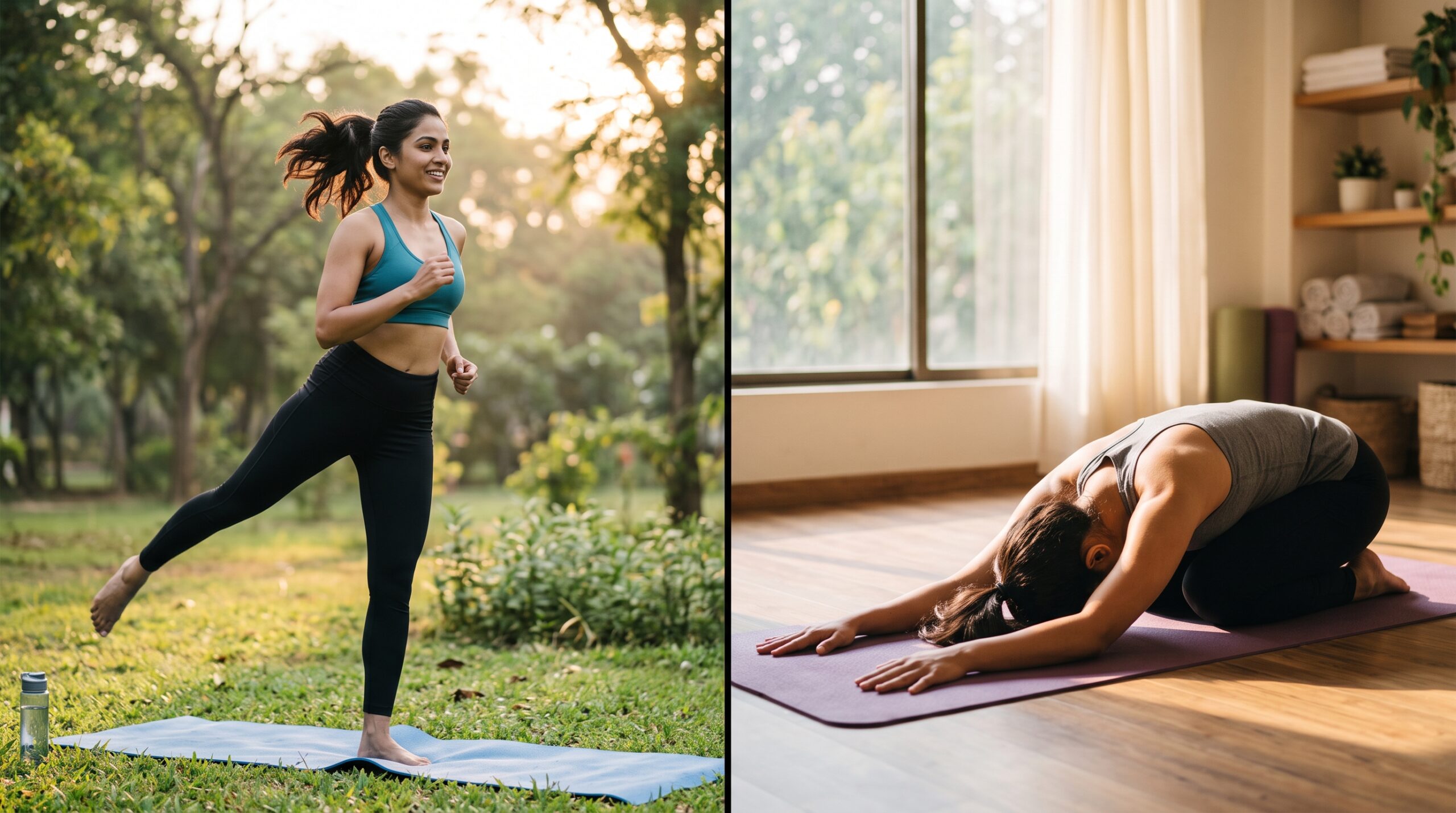
Dynamic stretching before a workout and static stretching after a workout

Most people treat stretching like the terms and conditions of fitness, they scroll past it, skip it entirely, and assume nothing bad will happen. Until something bad happens.

A pulled muscle on your third week of a new routine. A stiff lower back that lingers for days. Knee tightness that makes you feel twice your age the morning after leg day. Sound familiar? Stretching is not an optional add on, it is the part of your workout that protects everything else you are doing. This guide covers everything you need to know about stretching before and after a workout, in plain language, with routines you can use today.

The Biggest Mistake People Make With Stretching

Ask most people what they do before a workout, and they will say they stretch. Ask what that looks like, and they will describe standing still, grabbing their ankle, and holding it for 30 seconds.

That is static stretching, and doing it on cold muscles before exercise is actually counterproductive. Studies have consistently shown that static stretching before a workout can temporarily reduce muscle strength and power by up to 8 to 10%. You are essentially lengthening a cold, unprepared muscle and then asking it to perform explosively. That is a setup for injury, not prevention.

The right approach is different before and after. Before a workout, you need dynamic stretching. After a workout, static stretching is exactly what your body needs. Understanding this difference alone puts you ahead of most gym goers.

What Happens to Your Body Without Proper Stretching

Muscles are like rubber bands. A cold rubber band stretched suddenly can snap. A warm rubber band stretches smoothly without damage.

When you exercise without a proper warm up, your muscle fibres and connective tissues are stiff. Blood flow to the muscles is limited. Your joints have not been taken through their full range of motion. In this state, even a routine movement, a squat, a lunge, a shoulder press, can cause strain.

Skip the post workout cool down stretch, and you are leaving another problem in place. After intense exercise, your muscles are contracted and shortened. Lactic acid and metabolic waste have built up. If you do not stretch and allow the muscles to lengthen and circulation to clear the waste products, you wake up the next day feeling unnecessarily stiff and sore, which makes your next workout harder to start.

Consistent stretching, done correctly, reduces both of these problems significantly.

Before Your Workout: Dynamic Stretching

Dynamic stretching means controlled, rhythmic movement through a range of motion. You are not holding a position, you are moving through it repeatedly. This increases blood flow, raises muscle temperature, activates the nervous system, and prepares your joints for the specific demands of the workout ahead.

Spend 5 to 7 minutes on this before every session. It is not a warm up jog on a treadmill, it is targeted movement that gets your body ready to work.

01

Leg Swings

10 swings per leg

Stand beside a wall, holding it lightly for balance. Swing one leg forward and backward in a controlled arc, not wildly, but through a comfortable range that gradually increases with each swing.

How to Do It

Stand beside a wall, holding it lightly for balance. Swing one leg forward and backward in a controlled arc, not wildly, but through a comfortable range that gradually increases with each swing. Ten swings per leg.

Why It Matters

This mobilizes the hip joint and wakes up the hip flexors and hamstrings, exactly what you need before squats, lunges, or any lower body work.

02

Arm Circles

15 sec each direction

Extend both arms out to the sides and draw large, slow circles, forward then backward, gradually increasing the size as you go.

How to Do It

Extend both arms out to the sides and draw large, slow circles, forward for 15 seconds, then backward for 15 seconds. Gradually increase the size of the circles as you go.

Why It Matters

This lubricates the shoulder joint and activates the rotator cuff muscles, which are critical to protect during pressing or pulling exercises.

03

Hip Circles

10 rotations each way

Stand with feet shoulder width apart and hands on hips. Draw slow, large circles with your hips, like a slow hula hoop movement.

How to Do It

Stand with feet shoulder width apart and hands on hips. Draw slow, large circles with your hips, 10 rotations each direction. Think of it like a slow hula hoop movement.

Why It Matters

Most people have chronically tight hips from sitting. Hip circles open up the joint before it is asked to move under load, which reduces strain on the lower back and knees.

04

Inchworms

6 to 8 reps

Stand with feet hip width apart, hinge forward and walk your hands out to a plank, hold briefly, then walk your feet back in and stand up.

How to Do It

Stand with feet hip width apart. Hinge forward at the hips and walk your hands out along the floor until you are in a plank position. Hold for two seconds, then walk your feet toward your hands and stand back up. Repeat 6 to 8 times.

Why It Matters

Inchworms warm up the entire posterior chain, hamstrings, lower back, calves, while also engaging the core and shoulders. It is one of the most complete pre workout movements you can do.

05

High Knees (Controlled)

30 seconds

March in place, driving your knees up toward your chest at a moderate pace, keeping your core lightly engaged and posture tall.

How to Do It

March in place, driving your knees up toward your chest at a moderate pace for 30 seconds. Keep your core lightly engaged and your posture tall.

Why It Matters

This elevates your heart rate gently, activates your hip flexors, and signals to your entire body that it is time to work, without fatiguing you before your session starts.

06

Torso Rotations

10 reps each way

Stand tall with arms extended forward at shoulder height, rotate your upper body right then left through slow, deliberate rotations.

How to Do It

Stand tall with feet shoulder width apart and arms extended forward at shoulder height. Rotate your upper body to the right as far as comfortable, then back through centre and to the left. Perform 10 slow, deliberate rotations each way.

Why It Matters

This mobilizes the thoracic spine, the middle section of your back, which tends to be stiff in people who sit for long periods. Opening it up before a workout improves posture and reduces the risk of strain during rotational movements.

After Your Workout: Static Stretching

After exercise, your muscles are warm, pliable, and ready to be lengthened. This is when static stretching, holding a position for 20 to 45 seconds, is both safe and highly effective.

Post workout static stretching does several things. It helps the muscles return to their resting length after contraction. It promotes blood flow to flush out metabolic waste. And it activates the parasympathetic nervous system, the rest and digest state, which helps your body shift from workout mode into recovery mode.

Spend 8 to 10 minutes on this after every session. The investment is small, the impact on soreness, flexibility, and long term joint health is significant.

01

Standing Quad Stretch

30 sec per side

Stand on one leg, bend the other knee and bring your heel toward your glutes, holding your ankle. Keep both knees together and stand tall.

How to Do It

Stand on one leg, bend the other knee and bring your heel toward your glutes, holding your ankle. Keep both knees together and stand tall. Hold 30 seconds per side.

Why It Matters

The quadriceps are worked heavily in any lower body session, and they need to be lengthened after intense use. Tight quads also pull on the knee joint and compress the patella, contributing to the knee discomfort many people experience after training.

02

Seated Hamstring Stretch

30 to 40 seconds

Sit on the floor with legs extended in front of you. Hinge forward from the hips, not by rounding your back, until you feel a stretch along the back of your thighs.

How to Do It

Sit on the floor with legs extended in front of you. Hinge forward from the hips, not by rounding your back, but by tilting your pelvis forward, until you feel a stretch along the back of your thighs. Hold for 30 to 40 seconds.

Why It Matters

The hamstrings are among the most commonly tight muscles in people who exercise, and chronically shortened hamstrings contribute to lower back pain, poor posture, and reduced athletic performance.

03

Hip Flexor Lunge Stretch

30 sec per side

Step one foot forward into a lunge and lower your back knee to the floor. Push your hips gently forward until you feel a deep stretch at the front of your back hip.

How to Do It

Step one foot forward into a lunge and lower your back knee to the floor. Push your hips gently forward until you feel a deep stretch at the front of your back hip. Hold 30 seconds per side.

Why It Matters

If there is one stretch that matters most for the modern lifestyle, this is arguably it. Your hip flexors are contracted every time you sit, and they are working hard during exercise. Failing to stretch them leaves them chronically shortened, which tilts your pelvis and compresses your lumbar spine.

04

Child's Pose

45 to 60 seconds

From kneeling, push your hips back toward your heels and extend your arms forward on the floor, forehead down. Breathe deeply and let your lower back decompress.

How to Do It

From kneeling, push your hips back toward your heels and extend your arms forward on the floor, forehead down. Breathe deeply and let your lower back decompress with each exhale. Hold for 45 to 60 seconds.

Why It Matters

This gently stretches the lower back, hips, and shoulders simultaneously. It is also deeply calming, physically transitioning your body from exertion to rest in a way that feels immediately satisfying.

05

Cross Body Shoulder Stretch

25 to 30 sec per side

Bring one arm across your chest and use the opposite hand to press it gently closer to your body.

How to Do It

Bring one arm across your chest and use the opposite hand to press it gently closer to your body. Hold 25 to 30 seconds per side.

Why It Matters

After any upper body session, the posterior shoulder capsule is tight. This stretch directly targets that area, reducing the shoulder stiffness that commonly builds up over time with consistent pressing and pulling exercises.

06

Chest Opener Stretch

25 to 30 seconds

Clasp your hands behind your back and gently straighten your arms, lifting them slightly while opening your chest toward the ceiling.

How to Do It

Clasp your hands behind your back and gently straighten your arms, lifting them slightly while opening your chest toward the ceiling. Hold 25 to 30 seconds.

Why It Matters

This counteracts the rounded, forward hunched posture that develops from bench pressing, push ups, and everything we do at a desk or on our phones. After any session involving chest or pushing movements, this stretch is essential.

07

Cat Cow Spinal Release

8 to 10 cycles

Get on all fours. Inhale as you let your belly drop and lift your head and tailbone, exhale as you round your entire spine toward the ceiling and drop your head.

How to Do It

Get on all fours. Inhale as you let your belly drop and lift your head and tailbone (cow). Exhale as you round your entire spine toward the ceiling and drop your head (cat). Move slowly through 8 to 10 full cycles.

Why It Matters

This is a perfect way to end any workout because it mobilizes the entire spine from top to bottom, releases tension that accumulates in both the upper and lower back during training, and leaves you feeling genuinely looser than when you started.

How Long Should You Actually Stretch?

Here is a simple answer to what confuses a lot of people:

5 to 7 min
Before workout (dynamic)
8 to 10 min
After workout (static)
13 to 17 min
Total per session

That is it. You do not need 30 minutes of yoga before a workout or an hour of deep tissue work after. Consistent, correctly timed stretching for around 15 minutes total is what actually changes how your body feels and performs over time.

Common Stretching Mistakes to Avoid

  • Bouncing during static stretches. Ballistic bouncing triggers the stretch reflex, your muscle contracts defensively rather than relaxing. Hold your stretches steadily.

  • Holding your breath. Tension in the breath transfers to the muscle. Exhale slowly as you ease into each stretch, and breathe continuously throughout the hold.

  • Skipping stretching when you are short on time. If you only have 20 minutes to work out, use 5 for dynamic stretching, 10 for the actual session, and 5 for post workout stretching. A compressed session with proper stretching beats a full session without it.

  • Stretching through sharp pain. Discomfort and mild tension are normal. Sharp or intense pain is not. Back off, and if it persists, get it checked.

Quick Reference: Dynamic vs Static

 Dynamic StretchingStatic Stretching
WhenBefore your workoutAfter your workout
HowControlled, repeated movementHold a position steadily
Duration5 to 7 minutes total8 to 10 minutes total
Hold timeNot held, moving through range20 to 45 seconds per stretch
PurposeRaise temperature, activate musclesLengthen muscles, aid recovery

Final Thoughts

Stretching before and after a workout is not a bonus activity for flexible people. It is the framework that makes everything else you do in the gym or at home safer, more effective, and more sustainable.

Dynamic stretching prepares your body to perform. Static stretching helps it recover. Together, they reduce injury risk, improve flexibility over time, and make the difference between a fitness routine you can maintain for years and one that keeps getting interrupted by niggling aches and strains.

Start treating the 15 minutes around your workout as seriously as the workout itself. Your body, and your progress, will reflect that choice very quickly.

High-Protein Desi Dinner Ideas for Weight Loss

High-Protein Desi Dinner Ideas for Weight Loss | HealthFitnessDairy

High-Protein Desi Dinner Ideas for Weight Loss

High-Protein Desi Dinner Ideas

You have had a long day. You are tired. The last thing you want is to stand in the kitchen for an hour cooking something complicated, but you also do not want to undo all your progress with a heavy, oily dinner.

The truth is, desi cuisine is actually packed with high-protein ingredients. Lentils, legumes, eggs, chicken, paneer, yogurt, these are the foundations of the food you already love. You do not need to abandon your cuisine to reach your goals. You just need to know how to put it together smartly.

Why Protein Matters So Much at Dinner

Protein is the most satiating macronutrient. It keeps you full longer than carbs or fat, which means you are far less likely to raid the kitchen at 10pm for something sweet. It also has a high thermic effect, your body burns more calories digesting protein than it does processing carbohydrates or fat.

Keeps You Full Longer

High-protein meals suppress hunger hormones more effectively than carb or fat-heavy meals, meaning fewer late-night cravings.

Overnight Muscle Repair

While you sleep, your body repairs tissues and regulates hormones. Adequate protein at dinner gives it the raw material it needs.

Higher Resting Metabolism

More muscle mass means more calories burned at rest. Protein at dinner is an investment in your metabolism over time.

Burns More to Digest

Protein has a thermic effect of 20 to 30%, your body burns significantly more energy processing it than carbs or fat.

The 5 Recipes

01

Masoor Dal with Spinach and a Poached Egg

Protein: Approx. 22 to 25g per serving
High Protein

This is one of those meals that sounds simple but hits every nutritional target beautifully. Masoor dal (red lentils) is naturally high in protein and fiber. Add spinach for iron and micronutrients. Top it with a poached or soft-boiled egg and you have a complete, satisfying dinner that comes together in under 20 minutes.

Ingredients
  • 3/4 cup masoor dal, rinsed
  • 2 cups water
  • 1 large handful of fresh spinach
  • 1 to 2 eggs
  • 1 small onion, finely chopped
  • 2 garlic cloves, minced
  • 1 tsp cumin seeds
  • 1/2 tsp turmeric
  • 1/2 tsp red chili powder
  • 1 tbsp oil, salt to taste
How to Make It
  • 1Boil the dal in water with turmeric until soft, about 12 to 14 minutes.
  • 2In a separate pan, heat oil, sizzle cumin seeds, then saute onion and garlic until golden.
  • 3Add chili powder, stir for 30 seconds, then pour the tadka into the cooked dal.
  • 4Stir in the spinach and simmer 3 to 4 minutes until wilted. Season with salt.
  • 5Poach or soft-boil your eggs separately and place on top to serve.
Serving tip: Serve without roti if you want to keep it very light, or with one small whole wheat roti if you need something more substantial. The combination of lentil protein and egg protein makes this one of the most complete high-protein desi dinners you can make.
02

Tandoori Chicken with Raita and Salad

Protein: Approx. 38 to 42g per serving
High Protein

Chicken breast is one of the leanest, highest-protein foods available. When marinated in yogurt and spices and cooked on a hot pan, it tastes genuinely spectacular. This is the dinner you make when you want something that feels indulgent but is actually doing everything right nutritionally.

Ingredients
  • 1 large chicken breast (or 2 smaller), cut into strips
  • 1/2 cup plain yogurt
  • 1 tbsp ginger-garlic paste
  • 1 tsp red chili powder
  • 1/2 tsp turmeric, 1 tsp garam masala
  • 1 tsp cumin powder
  • Juice of half a lemon
  • 1 tsp oil, salt to taste
  • Raita: 1/2 cup yogurt, 1/4 cucumber grated, pinch of cumin, salt
How to Make It
  • 1Mix all marinade ingredients and coat the chicken strips. Let sit for at least 15 minutes, or marinate overnight in the fridge for deeper flavour.
  • 2Heat a pan with one teaspoon of oil on medium-high. Cook the chicken 5 to 6 minutes per side until cooked through and slightly charred at the edges.
  • 3Mix the raita ingredients together in a small bowl.
  • 4Serve the chicken over a bed of sliced cucumber, tomato, and onion. Add the raita on the side.
Serving tip: This dinner needs no roti or rice to feel complete. The protein from the chicken, combined with the probiotics in the raita and the fiber from the salad, makes it one of the most balanced high-protein desi dinner options available.
03

Chana and Vegetable Curry (No Oil Frying)

Protein: Approx. 18 to 20g per serving
High Protein

Chickpeas are a plant-based protein powerhouse, and they absorb spices brilliantly, which makes them the perfect base for a satisfying, high-protein desi dinner that is completely meat-free.

Ingredients
  • 1 cup boiled chickpeas (canned is fine, rinse well)
  • 1 medium onion, finely chopped
  • 2 medium tomatoes, chopped
  • 1 tbsp ginger-garlic paste
  • 1 tsp cumin seeds
  • 1 tsp coriander powder
  • 1/2 tsp turmeric, 1/2 tsp red chili powder
  • 1/2 tsp garam masala
  • 1 tbsp oil, fresh coriander, salt
How to Make It
  • 1Heat oil in a pan. Sizzle cumin seeds, then add onion and cook until deep golden, about 8 minutes. Do not rush this step; well-cooked onion is what gives the curry its depth.
  • 2Add ginger-garlic paste, cook for 2 minutes. Add all dry spices and stir for 30 seconds.
  • 3Add tomatoes, cook until they break down completely into a thick masala, about 6 to 7 minutes.
  • 4Add chickpeas, stir to coat, and add a splash of water if needed. Simmer 8 to 10 minutes.
  • 5Finish with garam masala and fresh coriander.
Serving tip: Serve with one small whole wheat roti or eat as-is for a lighter meal. Chickpeas are also high in fiber, which means this dinner will keep you full for hours.
04

Keema (Minced Chicken) with Peas

Protein: Approx. 32 to 35g per serving
High Protein

Minced chicken is an underrated protein source in desi cooking. It cooks fast, absorbs spices deeply, and delivers a huge protein hit per serving. Paired with green peas, which add a surprising amount of protein themselves, this becomes a quick, hearty dinner that feels completely satisfying.

Ingredients
  • 250g minced chicken (keema)
  • 1/2 cup green peas (fresh or frozen)
  • 1 medium onion, finely chopped
  • 2 garlic cloves and 1-inch ginger, minced
  • 2 tomatoes, chopped
  • 1 tsp cumin seeds, 1 tsp coriander powder
  • 1/2 tsp turmeric, 1/2 tsp red chili powder
  • 1/2 tsp garam masala
  • 1 tbsp oil, salt and fresh coriander
How to Make It
  • 1Heat oil, add cumin seeds and let them sizzle.
  • 2Add onion and cook until golden, then add ginger and garlic for another 2 minutes.
  • 3Add tomatoes and all spices. Cook until the tomatoes fully break down.
  • 4Add the minced chicken, breaking it up as it cooks. Stir continuously for 5 to 6 minutes until fully cooked and no pink remains.
  • 5Add peas, stir through, and cook for another 4 to 5 minutes. Finish with garam masala and fresh coriander.
Serving tip: Pairs beautifully with one small whole wheat roti, or serve with a side salad for an even lighter option. Use lean minced chicken rather than beef or lamb, you keep all the flavour with far fewer calories and saturated fat.
05

Paneer Bhurji with Sauteed Vegetables

Protein: Approx. 20 to 24g per serving
High Protein

Paneer bhurji is essentially scrambled paneer, and it is one of the fastest, most protein-rich vegetarian dinners in desi cuisine. Unlike a heavy paneer curry swimming in cream and butter, this version uses minimal oil and loads of vegetables to create something light, flavourful, and deeply satisfying.

Ingredients
  • 200g paneer, crumbled
  • 1/2 cup mixed vegetables (capsicum, peas, tomato, onion)
  • 1/2 tsp cumin seeds
  • 1/4 tsp turmeric, 1/4 tsp red chili powder
  • 1/4 tsp garam masala
  • 1 tsp oil, salt to taste
  • Fresh coriander and a squeeze of lemon to finish
How to Make It
  • 1Heat oil in a non-stick pan. Add cumin seeds and let them sizzle.
  • 2Add the mixed vegetables and saute on medium-high heat for 4 to 5 minutes until softened.
  • 3Add turmeric and chili powder, stir briefly.
  • 4Add the crumbled paneer and fold everything together gently. Cook for 3 to 4 minutes until the paneer is heated through and starting to catch some colour on the edges.
  • 5Finish with garam masala, fresh coriander, and a squeeze of lemon.
Serving tip: Serve on its own or with one small roti. The paneer provides a solid protein hit, and the vegetables add fiber and volume that makes the dish feel much larger than its calorie count suggests.

Tips for Making Every Desi Dinner More Protein-Rich

Beyond specific recipes, a few habits make any desi dinner more protein-forward:

  • Add a boiled egg on the side of any dal or sabzi, it costs almost nothing and adds 6 to 7g of complete protein instantly.

  • Swap white rice for a smaller portion of brown rice, it has slightly more protein and far more fiber.

  • Stir Greek yogurt into your daal instead of cream, richer texture, way more protein, fewer calories.

  • Use canned chickpeas or kidney beans as a fast add-in to any curry that needs more substance.

  • Season with ajwain (carom seeds) alongside your usual spices, it aids digestion, which matters when eating higher protein meals consistently.

Building a High-Protein Desi Dinner Rotation

You do not need a new recipe every single night. Pick three or four from this list and rotate them through the week:

DayDinnerProtein
MondayMasoor Dal with Spinach and Egg22 to 25g
TuesdayTandoori Chicken with Raita and Salad38 to 42g
WednesdayChana and Vegetable Curry18 to 20g
ThursdayKeema with Peas32 to 35g
FridayPaneer Bhurji with Vegetables20 to 24g
WeekendMix and match, or try a new variation 

Every one of these dinners is under 30 minutes, uses ingredients most desi kitchens already stock, and delivers the protein your body needs to support fat loss, muscle maintenance, and a genuinely restful night of recovery.

Final Thoughts

High-protein eating does not mean giving up the flavours you love. It means understanding which ingredients in your cuisine are already doing the heavy lifting, and building your meals around them more deliberately.

Dal, chicken, eggs, paneer, chickpeas, these are not diet foods. They are the real foundations of desi cooking. Put them front and centre on your plate at dinner, keep the oil measured rather than generous, and load up on vegetables alongside them.

Do that consistently, and the results will follow, without a single meal that feels like a punishment.

7-Day Diet Plan for Beginners

7-Day Diet Plan for Beginners – HealthFitnessDairy

7-Day Diet Plan for Beginners

7-Day Diet Plan for Beginners

You have decided to eat better. Maybe it is for weight loss. Maybe it is because you have been feeling sluggish for months and you are tired of it. Maybe a doctor said something that finally hit home. Whatever the reason, you are here, you are ready, and you want a clear plan to follow.

Here is the problem with most diet plans you find online: they are either unrealistically strict, full of foods that are impossible to find, or designed around a lifestyle that looks nothing like yours. You end up overwhelmed before you even start. This plan is different.

Before You Start: The Mindset That Makes This Work

A 7-day plan is not a magic solution. It is a reset, a structured week that breaks old habits, introduces better choices, and shows you how good it actually feels to eat well consistently.

Do not approach this as a punishment. You are not restricting yourself; you are upgrading. The goal is to come out the other side of this week with more energy, less bloating, better sleep, and a clearer sense of what eating well actually looks like for you.

Ground Rules Before Day One

  • Drink water consistently, aim for 8 glasses a day minimum. Most people are mildly dehydrated without knowing it, and it affects energy and hunger.
  • Do not skip meals. Skipping leads to overeating later. Three solid meals and one optional snack is the structure.
  • Keep portions sensible. You do not need to weigh every gram, but do not pile your plate mountain-high either.
  • Prep a little in advance. 20 minutes of prep on Sunday makes the whole week dramatically easier.

The Plate Formula (Use This Every Day)

Every meal this week follows a simple formula. You do not need to memorize macros or count calories. Just build your plate like this:

🥦
50%

Vegetables

Any non-starchy vegetables you enjoy

🍗
25%

Lean Protein

Eggs, chicken, lentils, fish, yogurt, tofu

🍚
25%

Complex Carbs

Brown rice, whole wheat roti, oats, sweet potato

This combination keeps you full, stabilizes blood sugar, and ensures you are getting nutrients without going overboard on calories. Simple, repeatable, and it works.

The 7-Day Meal Plan

Day 1

Reset and Begin

BreakfastVegetable besan chilla (2 pieces) with a small bowl of plain yogurt. High in protein and fiber, this sets a strong tone for the day.
LunchDal and sabzi with one whole wheat roti and a side salad of cucumber and tomato.
SnackA small handful of almonds (about 10 to 12) and one piece of fruit.
DinnerGrilled or pan-cooked chicken with a big portion of roasted or stir-fried vegetables. Keep oil minimal.
Day 2

Building Momentum

BreakfastVegetable daliya (broken wheat porridge) cooked with onion, tomato, and peas. Filling, warm, and takes 12 minutes.
LunchA large bowl of moong dal soup with a small portion of brown rice and a side of stir-fried spinach or any leafy green.
SnackGreek yogurt with a few slices of cucumber or a small apple.
DinnerEgg bhurji (spiced scrambled eggs) made with minimal oil, served with one whole wheat roti and a tomato-onion salad.
Day 3

Midweek Strength

BreakfastTwo boiled eggs with a slice of whole wheat toast and a cup of black tea or coffee (no sugar, or minimal).
LunchChicken or chickpea stir-fry with mixed vegetables, capsicum, carrots, green beans, served over a small portion of brown rice.
SnackA banana or a pear.
DinnerA large bowl of mixed vegetable soup (carrot, beans, tomato, onion, a little spinach) with one whole wheat roti.
Day 4

Keep It Light

BreakfastOvernight oats: 1/3 cup oats soaked in milk overnight, topped with a banana or a few strawberries in the morning. No cooking required.
LunchA protein-rich salad: chickpeas, cucumber, tomato, onion, a squeeze of lemon, some coriander, and a light drizzle of olive oil. More filling than it sounds.
SnackA small handful of walnuts or any unsalted nuts.
DinnerBaked or grilled fish with steamed vegetables and a small side of sweet potato. Substitute with grilled chicken or lentils if fish is not available.
Day 5

Bring Back Comfort

BreakfastVegetable poha, flattened rice cooked with onion, peas, mustard seeds, and a squeeze of lemon. Quick, light, and satisfying.
LunchPalak dal (spinach lentils) with one whole wheat roti and cucumber raita. Nutrient-dense, high in iron, and genuinely delicious.
SnackA cup of green tea and a small bowl of mixed fruit.
DinnerGrilled chicken or tofu with a big salad: greens, cherry tomatoes, cucumber, a little feta or paneer, lemon dressing.
Day 6

Weekend: Stay On Track

BreakfastA protein smoothie: blend one banana, a cup of milk or plant-based milk, two tablespoons of peanut butter, and a few ice cubes.
LunchIf eating out: grilled over fried, a side salad instead of fries, dal instead of a heavy curry. You can eat out and stay on track.
SnackHummus with carrot or cucumber sticks.
DinnerA homemade khichdi, rice and lentils cooked together with turmeric and a light tadka. One of the most balanced, easily digestible desi meals.
Day 7

Finish Strong

BreakfastEgg omelette with spinach, tomato, and one green chili, served with a slice of whole wheat toast.
LunchBrown rice with rajma (kidney bean curry) and a side salad. High protein, high fiber, deeply satisfying.
SnackA few dates or a small piece of dark chocolate (70% or higher). You made it to day seven, enjoy something.
DinnerGrilled or baked chicken or fish with roasted vegetables, bell peppers, zucchini, carrots, onions, tossed in a little olive oil and seasoning.

What to Avoid This Week

You do not need to eliminate anything permanently. But for these seven days, try to minimize:

Sugary drinks: sodas, packaged juices, energy drinks, overly sweetened chai
Fried foods: samosas, pakoras, puri, fried snacks
Refined carbs: white bread, maida-based foods, plain white rice in large portions
Packaged snacks: biscuits, chips, instant noodles
Late-night eating: aim to finish dinner at least 2 hours before bed
Skipping meals: this leads to overeating later and spikes hunger hormones

These are not banned forever. They are just on pause while you reset.

Tips to Make the Week Easier

  • Cook in batches: make a large pot of dal or brown rice and use it across two days
  • Keep healthy snacks visible: a bowl of fruit on the counter, nuts in a small container on your desk
  • Drink water before every meal: it reduces how much you eat without any effort
  • Do not wait until you are starving to decide what to eat: know your next meal in advance
  • Sleep enough: poor sleep increases hunger hormones the next day, making every food decision harder

What Happens After Day 7?

Here is the honest answer: one week of clean eating will not transform your body. But it will absolutely transform your relationship with food, and that is worth more.

After this week, you will know what balanced meals look like. You will have recipes that work. You will have felt what consistent energy feels like when you are not riding blood sugar spikes and crashes all day.

Use this week as your baseline and repeat it. Add variety as you go. Stay consistent rather than perfect. Day one starts tomorrow. Or better yet, tonight. Go prep those overnight oats.

How to Stay Active with a Desk Job

How to Stay Active with a Desk Job – Health Fitness Dairy

How to Stay Active with a Desk Job

Person working at a desk trying to stay active

You sit down at 9am, look up, and it's somehow already 2pm. You haven't moved. Your back is stiff, your neck aches, and your legs feel like they've forgotten they exist. You tell yourself you'll stretch later. You don't.

Sound familiar? If you work a desk job, this is just Tuesday.

The average office worker sits for around 10 hours a day when you factor in commuting, desk time, and the couch at the end of the day. And the research on what prolonged sitting does to the body is genuinely alarming: increased risk of heart disease, type 2 diabetes, back pain, poor posture, sluggish metabolism, and even reduced mental sharpness.

The good news is that you don't need to quit your job or buy a treadmill desk to fix this. Small, strategic changes throughout your workday can counteract most of the damage. Here's exactly how to do it.

Why Sitting Is Harder on Your Body Than You Think

Most people assume that as long as they exercise in the morning or evening, the hours spent sitting don't matter much. Unfortunately, that's not how it works.

Research has consistently shown that prolonged, uninterrupted sitting has negative health effects that are largely independent of how much you exercise. In other words, a person who goes to the gym every morning but sits still for the next 8 hours is still at elevated health risk compared to someone who moves regularly throughout the day.

The reason comes down to how your body handles blood sugar, circulation, and muscle activation. When you sit for extended periods, your largest muscle groups, your legs and glutes, go essentially dormant. Blood pools in the lower body, circulation slows, your posture collapses forward, and your metabolism drops significantly. Breaking up sitting time is the fix. And it doesn't require heroic effort.

The Power of Movement Snacks

"Movement snacks" is exactly what it sounds like: small bites of physical activity scattered throughout your day rather than one long session.

Research from the University of British Columbia found that short 3-minute walks every 30 minutes were more effective at regulating blood sugar than a single 30-minute walk after work. That's significant. It means the distribution of movement matters, not just the total amount.

3 min every 30 min

Short walks every half hour beat one long walk after work for blood sugar regulation.

Consistency wins

The goal is to interrupt prolonged stillness with brief bursts of movement, consistently, all day.

Set a Timer: Seriously

The biggest obstacle to moving during the workday isn't laziness. It's the fact that you get absorbed in work and genuinely forget.

Set a timer on your phone or computer to go off every 45 to 60 minutes. When it does, stand up. Even if you just stand for 30 seconds and sit back down, you've broken the pattern. Over time, you build micro-habits around these reminders.

Many people use apps like Stretchly or desktop widgets that prompt movement breaks. Your phone's health app likely already tracks how often you stand and will remind you if you haven't moved in a while. Use that feature. Let your devices work for you.

Desk Exercises That Actually Work

You don't need to leave your desk for all of these. Some can be done right in your chair:

  • 1 Seated spinal twist Sit upright, place your right hand on the back of your chair, and gently rotate your torso to the right. Hold for 15 to 20 seconds, then switch sides. This counteracts the hunched-forward position that desk work locks you into.
  • 2 Calf raises While standing (or even seated), rise up on your toes and lower back down. Do 15 to 20 reps. This activates the calf muscles and improves circulation in the lower legs, combating that heavy, achy feeling that comes from sitting too long.
  • 3 Shoulder blade squeezes Sit up straight, pull your shoulders back, and squeeze your shoulder blades together like you're trying to hold a pencil between them. Hold for 5 seconds, release, and repeat 10 times. This directly addresses the rounding that most desk workers develop.
  • 4 Seated glute squeeze Contract your glute muscles while sitting, hold for 5 seconds, and release. Nobody can see you doing this. It's subtle and effective for reactivating muscles that essentially "switch off" during long sitting sessions.
  • 5 Neck rolls Drop your chin to your chest, slowly roll your head to the right, hold for a few seconds, then roll to the left. Do this slowly and gently with no aggressive movements. Your neck carries enormous tension from looking at a screen all day.

None of these take more than 2 minutes. Cycle through a few every hour and your body will feel noticeably different by the end of the day.

Walk More Without Rearranging Your Life

You don't need to start training for a 5K. You just need to find the small opportunities for walking that already exist in your day and actually take them.

Walk during phone calls

If a call doesn't require you to be at your computer, stand up and walk. Ten minutes of calls easily becomes ten minutes of walking with zero extra time required.

Take the longer route

Use the bathroom on a different floor. Park further away. Choose the stairs. Each feels small but they add up to thousands of extra steps over a week.

Eat lunch away from your desk

You get movement AND a genuine mental break from the screen, which actually improves your afternoon focus and reduces fatigue.

Walk to a colleague's desk

In an era of Slack messages and emails, walking over to someone's workspace is almost radical. Do it anyway. Better for communication and for your body.

Rethink Your Workspace Setup

Sometimes staying active at a desk job is about changing the environment itself, not just your habits.

Try a standing desk or converter. You don't need to stand all day as that has its own downsides. But alternating between sitting and standing every hour or so is genuinely effective for reducing the harms of prolonged sitting. Many companies will provide these on request, especially if you flag it as a health concern.

Position frequently used items away from your desk. Put your printer across the room. Keep your water glass in the kitchen so you have to refill it by walking there. It sounds almost comically simple, but it forces you to get up regularly throughout the day.

Try a balance ball chair occasionally. Sitting on an exercise ball for portions of the day engages your core and encourages better posture. Don't use it all day, but even 30 to 60 minutes creates a meaningful difference.

Use Your Breaks Intentionally

Most workers take breaks, but they spend them scrolling on their phones, which means their body still isn't moving. Use your break time differently.

A 5-minute break where you walk around the building does far more for your energy, focus, and physical health than 5 minutes of Instagram. Try the Pomodoro technique: 25 minutes of focused work, then a 5-minute break. The break doesn't count unless you physically move. You'll find your afternoon productivity actually improves when breaks are physical rather than screen-based.

What to Do After Work

All the desk movement in the world is more effective when combined with some intentional activity at the end of the day. You don't need a gym, but something that gets you moving for 20 to 30 minutes makes a genuine difference:

  • 1Evening walk after dinnerGreat for blood sugar regulation too. One of the simplest and most effective habits you can build.
  • 2Short home workout or yoga sessionEven 15 to 20 minutes at home is enough to offset the damage of a sedentary day.
  • 3Any physical hobby you enjoyCycling, swimming, badminton. The best exercise is the one you'll actually do. Pick something you like, even a little.

One Week Challenge

  • Set a movement timer every 45 minutes during work hours
  • Walk during at least one phone call per day
  • Do 5 minutes of desk exercises at lunch
  • Take the stairs instead of the elevator every day this week
  • Go for a 15-minute walk after dinner on at least 3 evenings

Final Thoughts

A desk job doesn't have to mean a sedentary life. The research is clear: consistent, distributed movement throughout the day is what protects your health, keeps your energy up, and prevents the slow accumulation of aches and stiffness that most office workers accept as inevitable.

None of this requires a gym membership or an extra hour in your day. It requires awareness, a timer, and small decisions made consistently.

Stand up when you can. Walk when there's a reason. Move a little, often. That's the whole secret and it starts today.

5 Healthy Desi Breakfasts Under 300 Calories

5 Healthy Desi Breakfasts Under 300 Calories – HealthFitnessDairy

5 Healthy Desi Breakfasts Under 300 Calories

5 Healthy Desi Breakfasts Under 300 Calories

Most mornings go one of two ways. Either you are rushing out the door with nothing but a cup of chai in hand, or you sit down to a paratha dripping in ghee because that is just what breakfast has always looked like.

Neither one is doing you any favors. Skipping breakfast leaves you starving and snacky by 11am. And the classic heavy, fried desi breakfast while delicious can leave you sluggish before the day even starts. Here is the part that might surprise you: you do not have to choose between flavor and a lighter breakfast. Desi cuisine has some genuinely fantastic options that are quick, satisfying, under 300 calories, and still taste like home.

Why Breakfast Choice Matters So Much

Before we get to the recipes, it is worth understanding why breakfast deserves this much attention in the first place. What you eat in the morning sets the tone at a hormonal level for the rest of your day. A breakfast heavy in refined carbs and oil spikes your blood sugar fast, then crashes it just as quickly. That crash is exactly what triggers the 11am hunger pangs and the urge to reach for something sweet.

High Carb Breakfast

Blood sugar spikes fast then crashes. You are hungry again by 10 to 11am and reaching for snacks. Energy dips and focus suffers by midday.

Protein and Fiber Breakfast

Digests slowly, blood sugar stays steady. You stay genuinely full well into the afternoon with consistent energy and better focus all morning.

A breakfast built around protein and fiber digests slowly, keeps your blood sugar steady, and keeps you genuinely full not just for an hour but well into your afternoon. The five recipes below are designed around exactly that principle.

The 5 Recipes

01

Vegetable Besan Chilla

Approx. 220 Calories

Besan chilla is one of the most underrated breakfast options in desi cuisine. It is essentially a savory pancake made from chickpea flour, and it is naturally high in protein and fiber, a rare combination for a breakfast that also tastes incredible.

Ingredients
  • 1/2 cup besan (chickpea flour)
  • 1/4 cup finely chopped onion, tomato and capsicum
  • A pinch of turmeric
  • 1/4 tsp red chili powder
  • Salt to taste
  • Water as needed
  • 1/2 tsp oil for cooking
How to Make It
  • 1Mix the besan with chopped vegetables, turmeric, chili powder and salt in a bowl.
  • 2Slowly add water, whisking until you get a smooth pourable batter.
  • 3Heat a non-stick pan with a few drops of oil. Pour the batter and spread into a thin circle.
  • 4Cook for 2 to 3 minutes on each side until golden and slightly crisp.

Why this works: Chickpea flour is naturally rich in protein and fiber, which means this chilla keeps you fuller for longer than a typical breakfast of similar size. Pair it with a small bowl of yogurt or mint chutney and you have a complete, satisfying meal in under 10 minutes.

02

Vegetable Daliya (Broken Wheat Porridge)

Approx. 250 Calories

If you grew up with daliya, you know it is comfort food in a bowl. The good news is this savory version is both nostalgic and genuinely great for weight management.

Ingredients
  • 1/4 cup daliya (broken wheat), rinsed
  • 1 cup water or vegetable stock
  • 1/4 cup mixed vegetables (carrots, peas, beans)
  • 1/4 tsp cumin seeds
  • A pinch of turmeric
  • Salt to taste
  • 1/2 tsp oil or ghee
How to Make It
  • 1Heat oil in a pan, add cumin seeds and let them sizzle for a few seconds.
  • 2Add the chopped vegetables and saute for 2 to 3 minutes.
  • 3Add the daliya and turmeric, stir for a minute to lightly toast it.
  • 4Pour in the water or stock, add salt, and simmer for 10 to 12 minutes until the daliya is soft and the mixture thickens.

Why this works: Daliya is a fantastic source of fiber and because it is a whole grain it digests slowly. That means stable energy and steady blood sugar all morning with no crash before lunch. It is also incredibly gentle on the stomach.

03

Egg Bhurji with Whole Wheat Toast

Approx. 280 Calories

Egg bhurji is spiced scrambled eggs, and it might be one of the fastest, most protein-packed desi breakfasts you can make. This version keeps the flavor while controlling the oil.

Ingredients
  • 2 eggs
  • 1/4 cup finely chopped onion, tomato and green chili
  • A pinch of turmeric
  • 1/4 tsp red chili powder
  • Salt to taste
  • 1/2 tsp oil
  • 1 slice whole wheat bread, toasted
How to Make It
  • 1Heat oil in a pan. Add onions and saute until soft, then add tomato and green chili, cook for 2 more minutes.
  • 2Add turmeric and chili powder, stir briefly.
  • 3Crack the eggs directly into the pan and scramble everything together over medium heat until fully cooked.
  • 4Season with salt and serve with a slice of toasted whole wheat bread.

Why this works: Eggs are one of the most complete protein sources available. Pairing them with whole wheat toast instead of regular white bread or paratha adds fiber without excessive calories. This breakfast genuinely keeps hunger away for hours, perfect for busy mornings when lunch might be delayed.

04

Moong Dal Cheela with Mint Chutney

Approx. 230 Calories

This is besan chilla's protein-packed cousin, made from yellow moong dal instead of chickpea flour. It is lighter, slightly different in flavor, and equally quick to make if you plan ahead.

Ingredients
  • 1/2 cup yellow moong dal, soaked for at least 2 hours
  • 1 small green chili
  • A small piece of ginger
  • Salt to taste
  • 1/2 tsp oil for cooking
How to Make It
  • 1Drain the soaked moong dal and blend with green chili, ginger, salt and a splash of water until smooth.
  • 2Heat a non-stick pan with a few drops of oil. Pour the batter and spread into a thin circle.
  • 3Cook for 2 to 3 minutes per side until lightly golden.
  • 4Serve with mint chutney or a small side of yogurt.

Why this works: Moong dal is one of the lightest, most easily digestible lentils and it is packed with plant-based protein. This breakfast is especially great if heavier foods tend to leave you feeling sluggish in the morning.

05

Vegetable Poha

Approx. 270 Calories

Poha is a breakfast staple across many South Asian households, and for good reason. It is quick, light and endlessly customizable. The key to keeping it healthy is controlling the oil and loading up on vegetables.

Ingredients
  • 1/2 cup flattened rice (poha), rinsed and drained
  • 1/4 cup chopped onion, peas and carrot
  • 1/4 tsp mustard seeds
  • A few curry leaves (optional)
  • A pinch of turmeric
  • Salt to taste
  • 1/2 tsp oil
  • A squeeze of lemon juice
How to Make It
  • 1Heat oil in a pan, add mustard seeds and curry leaves, let them sizzle for a few seconds.
  • 2Add onions and saute until translucent, then add peas and carrot, cook for 2 to 3 minutes.
  • 3Add turmeric and salt, then gently fold in the rinsed poha.
  • 4Cook for 2 to 3 minutes stirring gently, then finish with a squeeze of fresh lemon juice.

Why this works: Poha is light on the stomach and naturally lower in calories than most rice-based dishes, especially when you go easy on the oil. The vegetables add fiber and volume, making this feel more substantial than its calorie count suggests.

Tips to Keep Your Desi Breakfast Light Without Losing Flavor

A few small adjustments make a big difference across any of these recipes:

  • Use a non-stick pan so you can cut oil down to a teaspoon or less without food sticking
  • Add lemon juice or fresh herbs at the end, they boost flavor without adding any calories
  • Load up on vegetables wherever possible, they add volume, fiber and nutrients for very few extra calories
  • Choose whole grains over refined ones, daliya over maida, whole wheat over white flour
  • Drink a glass of water first thing, it kickstarts digestion and curbs the urge to overeat later

Building a Weekly Breakfast Rotation

You do not need to reinvent breakfast every single day. Pick a few of these and rotate through the week:

DayBreakfastCalories
MondayVegetable Besan Chilla~220 kcal
TuesdayEgg Bhurji with Whole Wheat Toast~280 kcal
WednesdayVegetable Daliya~250 kcal
ThursdayMoong Dal Cheela with Mint Chutney~230 kcal
FridayVegetable Poha~270 kcal

Each one takes 10 to 15 minutes, uses ingredients most desi kitchens already have, and keeps you well under 300 calories without sacrificing the flavors you actually enjoy.

Final Thoughts

A healthy breakfast does not have to mean giving up the food you grew up loving. It just means making a few smart adjustments: less oil, more protein, more vegetables, whole grains over refined ones.

These five recipes prove that desi breakfasts can be quick, light and deeply satisfying all at once. Pick one for tomorrow morning and notice how different your day feels when it starts with a breakfast that actually works in your favor.

15-Minute Home HIIT Workout (No Equipment)

15-Minute Home HIIT Workout (No Equipment) – Health Fitness Dairy

15-Minute Home HIIT Workout (No Equipment)

15 Minute Home HIIT Workout No Equipment

You've got 15 minutes. Maybe it's before the kids wake up. Maybe it's a gap between Zoom calls. Maybe it's late at night and the gym closed an hour ago. Whatever the reason, you don't have time for a full workout but you still want results.

This is exactly where HIIT comes in. High-Intensity Interval Training isn't just a fitness buzzword. It's one of the most efficient, research-backed ways to burn calories, improve cardiovascular fitness, and build strength, all without a single piece of equipment.

What Makes HIIT So Effective

HIIT alternates between short bursts of intense effort and brief recovery periods. Instead of jogging at a steady pace for 45 minutes, you might sprint hard for 30 seconds, then rest for 15, and repeat. Three reasons why this works so well:

Burns Calories After You Stop

HIIT triggers excess post-exercise oxygen consumption (EPOC), meaning your body keeps burning calories at an elevated rate for hours after your workout ends as it recovers. Steady-state cardio doesn't produce nearly the same effect.

Incredibly Time-Efficient

Studies comparing HIIT to longer moderate-intensity workouts found similar or sometimes superior improvements in cardiovascular fitness and fat loss, in a fraction of the time.

Strength and Cardio Together

Bodyweight HIIT moves like squat jumps and mountain climbers challenge your muscles while also spiking your heart rate, giving you two benefits in one session.

Zero Equipment Needed

No dumbbells, no gym, no machine. Just you, your bodyweight, and a floor. That means no excuses and no monthly membership fee.

Is HIIT Right for Beginners?

Yes, with one important note: intensity is relative. HIIT doesn't mean pushing yourself like an Olympic athlete. It means working as hard as you can relative to your current fitness level.

If you're new to exercise, your version of "high intensity" might be a fast-paced march instead of a sprint. That's completely fine. The principle of alternating hard effort with recovery still applies and still works. If you have joint issues, heart conditions, or are returning from injury, check with a doctor first.

Warm Up First: Don't Skip This

HIIT puts your body under real stress quickly. Jumping into it cold increases your risk of strain. Spend two minutes on this warm-up before you start:

  • Marching in place: 30 seconds
  • Arm circles: 20 seconds each direction
  • Bodyweight squats (slow, controlled): 30 seconds
  • Standing torso twists: 20 seconds
  • Light jumping jacks: 30 seconds

This raises your heart rate gradually and prepares your joints and muscles for the intensity ahead.

The 15-Minute HIIT Workout

Here's the structure: 40 seconds of work, followed by 20 seconds of rest, moving through six exercises. Complete the full circuit twice and you'll land right around 15 minutes including your warm-up.

Push hard during the work intervals as that's the entire point of HIIT. The rest periods are short on purpose; they're meant to be just enough to catch your breath, not fully recover.

01

Jumping Jacks

Full Body

A classic for a reason. Jumping jacks elevate your heart rate fast and work your entire body. Keep your knees slightly soft on landing. For a low-impact version, step one foot out to the side while raising your arms, then alternate.

02

Bodyweight Squats (Fast)

Lower Body

Lower into a squat, then drive back up with speed almost like you're trying to jump slightly without leaving the ground. Works your quads, glutes and hamstrings while keeping your heart rate elevated.

03

Push-Ups

Upper Body

Hands slightly wider than shoulder-width, lower your chest toward the floor and push back up. If full push-ups are too challenging, drop to your knees or do them against a wall. Keep moving for the full 40 seconds.

04

Mountain Climbers

Core + Cardio

Get into a plank, hands under shoulders. Drive one knee toward your chest then quickly switch legs like you're running horizontally. Keep your hips low and avoid letting them pike up into the air.

05

Squat Jumps

Power + Legs

Perform a regular squat, then explode upward into a jump, landing softly back into the next squat. Squat jumps build explosive power while torching calories fast. If jumping is too much, stick with fast bodyweight squats.

06

Plank Shoulder Taps

Core Stability

Get into a hand plank, feet slightly wider than hip-width. Tap your right hand to your left shoulder, then alternate while keeping your hips as still as possible. This builds serious core strength over time.

How Often Should You Do HIIT?

HIIT is intense, which means your body needs real recovery time between sessions. Unlike light daily walks, this isn't something to do every single day.

ScheduleDetails
3x per weekThe sweet spot for most people, for example Monday, Wednesday, Friday
Rest daysLight activity like walking or stretching in between, not complete rest
Too much HIITCan cause burnout, elevated stress hormones and slower progress

More isn't always better. Smart frequency is what gets results.

How to Make It Harder or Easier

To Make It Easier

Reduce work intervals to 30 seconds and increase rest to 30 seconds. Remove jumping movements and replace with slower controlled versions. Take a few extra seconds of rest between exercises if needed.

To Make It Harder

Increase work intervals to 45 to 50 seconds while keeping rest at 20 seconds. Add a third full round instead of two. Increase your speed and push closer to your true maximum effort.

Your fitness will improve faster than you expect. What feels brutal in week one often feels manageable by week four. When that happens, that's your cue to increase the challenge.

Common Mistakes to Avoid

  • Skipping the warm-up

    This is the fastest way to get injured doing HIIT. Two minutes of warm-up is non-negotiable before every single session.

  • Sacrificing form for speed

    Going fast with bad form increases injury risk without improving results. Move as fast as you can while maintaining good technique, not faster.

  • Doing it every single day

    Your body needs recovery to actually adapt and get stronger. Rest days are part of the program, not a break from it.

  • Comparing yourself to others

    What matters is that you're working close to your own limit, not matching someone else's pace. Your "maximum effort" is personal.

Your HIIT Quick-Start Checklist

  • Warm up for 2 minutes before every session
  • 40 seconds work, 20 seconds rest per exercise
  • Complete 2 full rounds of all 6 exercises
  • Do this 3 times a week with rest days in between
  • Focus on form first, speed second

Final Thoughts

You don't need an hour at the gym to get a workout that genuinely challenges your body and improves your fitness. Fifteen minutes of focused, high-intensity effort done consistently three times a week can transform your cardiovascular health, build real strength, and torch calories long after you've finished.

No equipment. No excuses. Just you, your effort, and 15 minutes.

Set a timer, hit play on the routine above, and see how strong you feel by the end. Your future self, fitter, more energized and proud of showing up, is waiting on the other side of these 15 minutes.

How to Lose Weight Fast Without Exercise

How to Lose Weight Fast Without Exercise – Health Fitness Dairy

How to Lose Weight Fast Without Exercise

How to lose weight fast without exercise

Let's be real for a second. Life gets busy. Your knees hurt. The gym feels overwhelming. Or maybe you just genuinely hate working out and that's okay. You're still allowed to want to lose weight.

Here's the truth nobody in the fitness industry wants to admit: exercise plays a much smaller role in weight loss than most people think. Research consistently shows that what you eat accounts for roughly 80% of your results. The gym handles the other 20%. So if you've been skipping workouts and wondering if there's still hope. There absolutely is.

Why You Don't Need the Gym to Lose Weight

Weight loss comes down to one thing: a caloric deficit. You need to burn more calories than you consume. Exercise is one way to create that deficit, but it's not the only way and often not even the most effective.

A 30-minute run burns about 250 to 300 calories. That's one small snack. It's easy to eat those calories back without even noticing. Meanwhile, simply swapping one daily habit, say cutting out a sugary coffee drink can eliminate those same 300 calories effortlessly every single day.

Your body burns most of its calories just by existing. Breathing, digesting, thinking and that's your Basal Metabolic Rate (BMR), and it accounts for 60 to 70% of all calories you burn. No gym required.

Fix How You Eat Before You Fix What You Eat

Before changing your food choices, address how you eat. This is where most people overlook easy wins.

Eat Slowly

Your brain needs 15 to 20 minutes to register that you're full. Most people finish a meal in 7 minutes. Slow down, put your fork down between bites, and chew properly. You'll eat less without trying.

No Screens While Eating

Distracted eating is one of the biggest hidden causes of overeating. Studies show people eat 25 to 30% more when watching TV or scrolling. Your brain doesn't register the meal, so you keep going.

Use a Smaller Plate

It sounds almost too simple, but it works. A smaller plate makes the same amount of food look more generous. People consistently eat less without feeling deprived.

Stop Before You're Stuffed

Eat until you're about 80% full, then wait. The remaining fullness signal will catch up in a few minutes. This one habit alone can cut hundreds of calories per day.

Drink More Water (Seriously, This One's Big)

Water is one of the most powerful and underrated weight loss tools available. And it's free.

Drinking a glass or two of water before meals reduces how much you eat. One study found people who did this lost significantly more weight over 12 weeks than those who didn't. Water fills your stomach, takes the edge off hunger, and helps you distinguish real hunger from thirst, which your brain often confuses.

A fancy coffee drink, a juice, two sodas, and a glass of wine can add up to 800+ calories in a day, caloriess that do absolutely nothing to make you feel full. Cut liquid calories and replace sugary drinks with these instead:

Water (still or sparkling) Black coffee or plain tea Herbal teas

Just making this one swap can create a meaningful caloric deficit every day without touching your food at all.

Make Protein Your Best Friend

If you make only one dietary change, make it this: eat more protein. Protein is the most filling macronutrient. It keeps you satisfied longer, reduces cravings, and has a high thermic effect which means your body actually burns more calories digesting it than it does with carbs or fat.

Think about it practically. If your usual breakfast is toast and jam, you're hungry again by 10am because it's mostly fast carbs. Swap it for two eggs and some vegetables, and you'll easily make it to noon. Same rough effort but a totally different hunger outcome.

Eggs Chicken breast or turkey Greek yogurt or cottage cheese Lentils and chickpeas Fish and seafood Tofu or tempeh

Load Up on Fiber and Volume

Alongside protein, fiber is your other great ally. Fiber slows digestion, stabilizes blood sugar, and keeps you full for hours. It also prevents those mid-afternoon energy crashes that send you straight to the snack cupboard.

Think about the difference: a small bag of chips is 150 calories and gone in two minutes. A large bowl of salad with cucumbers, tomatoes, and a light dressing is also around 150 calories and takes 15 minutes to eat and fills you up completely.

Build every meal around a protein source and a big pile of vegetables, with a small portion of complex carbs. That formula alone can transform your results without a single calorie count.

Leafy greens and cucumbers Lentils and black beans Oats and sweet potatoes Apples and berries Bell peppers and zucchini

Sleep Is a Weight Loss Tool

This surprises most people, but poor sleep might be quietly destroying your progress. When you're sleep-deprived, your hunger hormone ghrelin spikes and your fullness hormone leptin drops. You wake up hungrier, crave calorie-dense junk food more intensely, and have significantly less willpower to resist it.

Studies show sleep-deprived people eat 300 to 500 more calories per day on average. Fix your sleep and you'll find your cravings are easier to manage without changing a single thing about your diet.

Keep a consistent sleep schedule Make your room cool and dark Avoid screens 30 to 60 min before bed Cut caffeine after 2pm

Manage Stress Because Cortisol Is Storing Your Fat

Chronic stress triggers cortisol, a hormone that increases appetite, drives cravings for comfort food, and actively promotes fat storage especiallylly around the belly. If you are stressed all the time and wondering why the scale won't budge, this might be why.

You don't need to become a meditation guru. Small, consistent stress-reduction habits make a real difference and actually change your hormonal environment in ways that make fat loss physically easier.

5 Min Deep Breathing Daily

Just five minutes of slow, deliberate breathing lowers cortisol levels measurably. Do it in the morning or before meals.

Slow Walk Outdoors

Even 20 minutes of walking outside reduces cortisol noticeably. No gym needed, no intensity needed.

Design Your Environment for Success

Willpower runs out, especially at the end of a long day when you're tired and stressed. The smarter strategy isn't to fight your impulses. It is smarter to rearrange your environment so the healthy choice becomes the easy choice.

  • Keep a bowl of fruit on your counter and cut vegetables at eye level in the fridge
  • Move less healthy snacks to the back of the cupboard, or don't buy them at all
  • Pre-portion snacks instead of eating straight from the bag
  • Meal prep a few things on weekends so healthy meals are grab-and-go during busy weekdays
  • Never go grocery shopping hungry

These aren't dramatic lifestyle overhauls. They're small tweaks that quietly reduce the number of bad decisions you make each day.

The 80/20 Rule: Stop Trying to Be Perfect

Here's a mindset shift that will serve you better than any diet: aim for consistency, not perfection.

The all-or-nothing approach of saying "I ate badly today so I have ruined everything" is what keeps people stuck in a cycle of restriction and overeating. Progress comes from what you do consistently over weeks and months, not from being perfect for three days and then binging.

You don't need to eat flawlessly to lose weight. Eat nutritious, whole foods about 80% of the time and don't stress about the other 20%. A meal out on the weekend, a piece of birthday cake, a glass of wine. None of these will undo your progress if your baseline is solid.

Your Starting Point This Week

You don't need to implement all of this at once. Pick two or three things and start there:

  • Drink a glass of water before every meal
  • Add a protein source to every meal
  • Replace sugary drinks with water or tea
  • Eat slowly, without screens
  • Get to bed 30 minutes earlier than usual

Final Thoughts

You don't need a gym membership to lose weight. What you need is an understanding of how your body works, a few consistent habits, and the patience to let them compound over time.

Start with food. Fix your sleep. Manage your stress. Design your environment. And give yourself permission to be imperfect along the way.

Stack these habits gradually, and within weeks you'll feel a noticeable difference without setting foot in a gym.